infrastructure
50 briefs tagged infrastructure, most recent first
Today's briefs

NVIDIA Launches RTX Spark for Local AI on Windows PCs Across Six Global Cities
NVIDIA marked the RTX Spark launch with simultaneous events in six global cities, celebrating a new wave of Windows laptops designed to run local AI workloads on-device using RTX GPU acceleration. RTX Spark is positioned as NVIDIA's platform push for local inference, enabling developers and end users to run LLMs, diffusion models, and other AI workloads without cloud dependency. For developers, this means a growing installed base of capable local AI hardware that can serve as a deployment target for on-device inference applications, reducing latency and privacy concerns associated with cloud-routed inference. The global rollout signals NVIDIA's intent to normalize local AI as a mainstream consumer and developer expectation, not just an enthusiast use case. This expands the surface area for locally-deployed agentic and generative AI apps across the Windows ecosystem.
NVIDIA

Websites Are Increasingly Blocking AI Agents from Web Access
A growing number of websites are actively closing their doors to AI agents, deploying bot-blocking measures, updated robots.txt rules, and access restrictions that specifically target autonomous AI crawlers and agent traffic. This trend represents a structural challenge for developers building agentic systems that rely on real-time web browsing, data extraction, or autonomous task execution across the open web. As AI agent traffic grows and becomes more distinguishable from human browsing, the friction between agent capabilities and web access policies is escalating into a systemic infrastructure problem. Developers building web-reliant agents need to account for increasing access failures, rate limits, and outright blocks when designing reliability and fallback logic. This dynamic also accelerates demand for curated data APIs, licensed content partnerships, and retrieval systems that don't depend on open web crawling.
The Verge

StepFun Releases Step 5 Preview Open Weights: 600B MoE, 27B Active Parameters, 1M Context
StepFun has released open weights for Step 5 Preview, a 600B total parameter Mixture-of-Experts model with 27B active parameters per forward pass and a 1 million token context window. The MoE architecture means inference costs scale with active parameters rather than total model size, making a frontier-class model substantially more accessible to self-hosters and fine-tuners. The 1M context window places it among the longest-context open-weights models available, enabling applications like full-codebase analysis, long-document reasoning, and extended agentic task execution without chunking. Developers working on retrieval-free long-context applications or looking for a large open-weights base for fine-tuning will find this a significant new option. StepFun's release adds to a growing roster of massive open-weights MoE models pushing the frontier of what can be self-hosted.
MarkTechPost

NVIDIA RTX Spark Laptops Launch Worldwide With Local AI Agent Support
NVIDIA's RTX Spark laptop lineup has launched globally, with a key feature being native support for running AI agents locally without cloud dependency. The hardware is designed around NVIDIA's latest mobile GPUs and includes software infrastructure for deploying agentic workloads directly on-device, targeting developers and power users who need privacy, latency, or cost advantages over cloud-based AI APIs. This is part of NVIDIA's broader push to make consumer and prosumer hardware viable for serious local AI inference and agent execution. For developers building or testing agentic applications, RTX Spark laptops offer a new tier of local compute that could meaningfully reduce reliance on hosted inference endpoints during development. The launch also marks a new era of AI-first laptop positioning, where agent support is a first-class hardware marketing feature.
NVIDIA

Perplexity Open-Sources SPACE: A Firecracker MicroVM Sandbox for AI Agents
Perplexity has released SPACE, an open-source sandbox environment built on Firecracker MicroVMs, designed specifically to provide isolated, secure execution environments for AI agents. Firecracker, originally developed by AWS for serverless workloads, provides lightweight virtualization with millisecond startup times, making it well-suited for running untrusted agent-generated code safely. SPACE addresses one of the core infrastructure challenges in deploying autonomous AI agents: how to let agents execute arbitrary code or interact with systems without exposing the host environment to risk. Developers building agentic pipelines, code-execution tools, or sandboxed AI workflows can use SPACE as a production-grade foundation rather than building isolation from scratch. This is a meaningful open-source contribution to the agent infrastructure stack from a prominent AI company.
Perplexity
NVIDIA RTX Spark Local AI Laptop Platform Launches With Windows Optimizations
NVIDIA is launching the RTX Spark platform, a new category of AI-optimized laptops designed to run local AI workloads at the edge, with Microsoft engineering Windows-level optimizations specifically for the hardware. The platform targets developers and professionals who need capable local inference without cloud dependency, with applications ranging from on-device LLM inference to AI-enhanced productivity tools. Microsoft's Windows integration includes low-level optimizations visible even in applications like Notepad, signaling a deep co-engineering effort rather than a surface-level marketing partnership. For developers, RTX Spark represents a meaningful expansion of the local AI compute tier, potentially enabling workloads previously requiring cloud GPUs to run on portable hardware. The launch positions NVIDIA and Microsoft to capture the growing demand for private, low-latency AI computation outside of data centers.
NVIDIA

NVIDIA and Hugging Face Open 2.8 Trillion Token Indic Pretraining Corpus With Full Pipeline
NVIDIA has released a 2.8-trillion-token Indic language pretraining corpus alongside a fully open data generation pipeline, published on Hugging Face. The dataset covers a wide range of Indic languages and is accompanied by the tooling needed to reproduce, extend, or adapt the pipeline for other low-resource language families. This is one of the largest publicly available non-English pretraining datasets, addressing a significant gap in multilingual AI development resources. For developers building applications targeting South Asian language markets, this corpus provides a foundation for training or fine-tuning models without constructing datasets from scratch. The open pipeline is particularly valuable, as it enables teams to apply the same methodology to other underrepresented languages.
NVIDIA

Labelbox Raises $100M+ Series E at $1.25B Valuation to Advance RL and AI Agents
Labelbox has closed a Series E funding round of over $100 million at a $1.25 billion valuation, with the stated focus on expanding capabilities in reinforcement learning and AI agent training infrastructure. As RL-based training becomes central to frontier model development — powering RLHF, RLAIF, and agentic self-improvement loops — data labeling and feedback platforms like Labelbox become increasingly critical infrastructure. This funding positions Labelbox to compete more directly with Scale AI and other data-centric AI infrastructure providers at the enterprise level. For developers and ML teams, this signals continued investment in the tooling layer that sits between raw data and production model quality. The RL and agents focus also reflects where the industry sees the next major training paradigm shift heading.
Unite.AI
European Cities Deploy NVIDIA-Powered AI Agents for Urban Operations
Multiple European cities have begun deploying AI agent systems built on NVIDIA's infrastructure to manage and optimize urban operations, including traffic, utilities, and public services. This represents one of the larger-scale real-world rollouts of agentic AI in a non-commercial, civic context, with NVIDIA serving as the underlying compute and software platform. The deployments use NVIDIA's AI Enterprise stack and agent frameworks, making this relevant to developers building large-scale, real-time decision-making systems on NVIDIA hardware. For engineers working on infrastructure automation or multi-agent coordination, city-scale deployments provide a concrete benchmark for the latency, reliability, and coordination requirements such systems must meet. This also signals that municipal governments are becoming active buyers of AI agent platforms, opening a new enterprise vertical.
NVIDIA

NVIDIA RTX Spark Laptop Platform Gains Broad PC App Ecosystem Support
NVIDIA has announced that its RTX Spark platform for local AI on laptops now has broad software ecosystem support across major PC applications, marking a readiness milestone for on-device AI workloads on consumer and professional hardware. The update covers software integrations across productivity, creative, and developer tools, effectively lowering the barrier for end-users to run local AI inference without cloud dependency. For developers building local-first AI applications, RTX Spark represents an increasingly viable deployment target with a growing installed base of capable hardware. Teams shipping desktop or workstation AI tools should review the updated compatibility list to understand which software frameworks and runtimes are now certified for the platform. This is part of NVIDIA's broader push to make local AI inference a mainstream option alongside cloud-hosted models.
NVIDIA
NVIDIA Opens Vera Rubin Architecture to Scale AI Factories at OCP Global Summit
NVIDIA has opened up its Vera Rubin GPU architecture at the OCP Global Summit, enabling ecosystem partners to build and scale AI factory infrastructure around the platform. The move is designed to accelerate adoption of Vera Rubin across hyperscalers, ODMs, and enterprise data center operators by publishing architectural specifications through the Open Compute Project. This is a strategic shift: by opening the architecture, NVIDIA invites broader hardware ecosystem integration while cementing Vera Rubin as the reference platform for next-generation AI compute. Developers and infrastructure engineers planning future AI cluster deployments should note that Vera Rubin-based systems are now being built by multiple vendors, improving supply diversity. Companion announcements from Wiwynn and ASUS at the same summit show hardware partners moving quickly to productize the platform.
NVIDIA
Microsoft's Maia 300 Chip Rolls Out, Reducing Reliance on NVIDIA GPUs
Microsoft has begun deploying its Maia 300 AI accelerator chip, a significant step in its strategy to reduce dependence on NVIDIA's GPU supply chain for running AI workloads at scale. The Maia 300 is designed to handle inference workloads across Microsoft's cloud infrastructure, directly powering services like Azure AI and Copilot. This move has meaningful implications for developers on Azure: Microsoft now has more control over compute availability, pricing, and latency for AI inference services, potentially improving reliability. It also signals a broader industry shift where hyperscalers are building custom silicon as a strategic moat, following Google's TPU and Amazon's Trainium/Inferentia path. Developers should monitor whether Maia 300 deployments translate into updated Azure AI service tiers or pricing changes.
Microsoft
SWI Group Raises €800M at €6.1B Valuation for Transatlantic AI Infrastructure Buildout
SWI Group has closed an €800 million institutional funding round at a €6.1 billion valuation, with proceeds earmarked for a transatlantic AI infrastructure expansion spanning data centers and compute capacity across Europe and North America. This scale of raise reflects continued institutional appetite for AI infrastructure plays as demand for GPU compute and data center capacity continues to outpace supply. For developers and organizations planning to scale AI workloads, the expansion of independent AI infrastructure providers increases competitive options beyond hyperscalers like AWS, Azure, and GCP. The transatlantic scope is particularly relevant for enterprises navigating EU data sovereignty requirements while maintaining US-side capacity. This positions SWI Group as a significant independent infrastructure player in the rapidly consolidating AI compute market.
Unite.AI

vLLM Ships Decision 3.0: New Open Decision Models via Semantic Router
vLLM has released Decision 3.0, a new generation of open decision models integrated with its semantic router, targeting intelligent request routing in LLM serving infrastructure. Decision models in this context are lightweight models trained to classify and route incoming prompts to the appropriate downstream model or pipeline based on semantic content, rather than rule-based heuristics. This is a significant developer tooling advancement for anyone running multi-model serving stacks, as it enables dynamic, learned routing without hand-crafted rules. The open nature of the release means teams can fine-tune routing behavior on their own traffic distributions. For engineers managing inference infrastructure at scale, this directly reduces cost and latency by ensuring prompts hit the right model on the first call.
MarkTechPost

Cloudflare Launches Clef-omni: 30B-A3B Multimodal Decision Model for Audio, Video, Image, and Text
Cloudflare has released Clef-omni, a 30B-parameter mixture-of-experts model with an active 3B parameter footprint, designed specifically as a multimodal decision model capable of processing audio, video, image, and text inputs. The model is framed as a 'decision model,' meaning it is optimized for routing, classification, and policy-enforcement tasks across modalities rather than pure generation. This positions Clef-omni as infrastructure-layer AI, sitting between raw inputs and downstream models to make fast, low-latency routing or filtering decisions at Cloudflare's network edge. Developers building pipelines that need to triage or classify heterogeneous media inputs before passing them to specialized models will find this directly applicable. The MoE architecture keeps inference costs low despite the large parameter count, making it viable for high-throughput edge deployments.
MarkTechPost
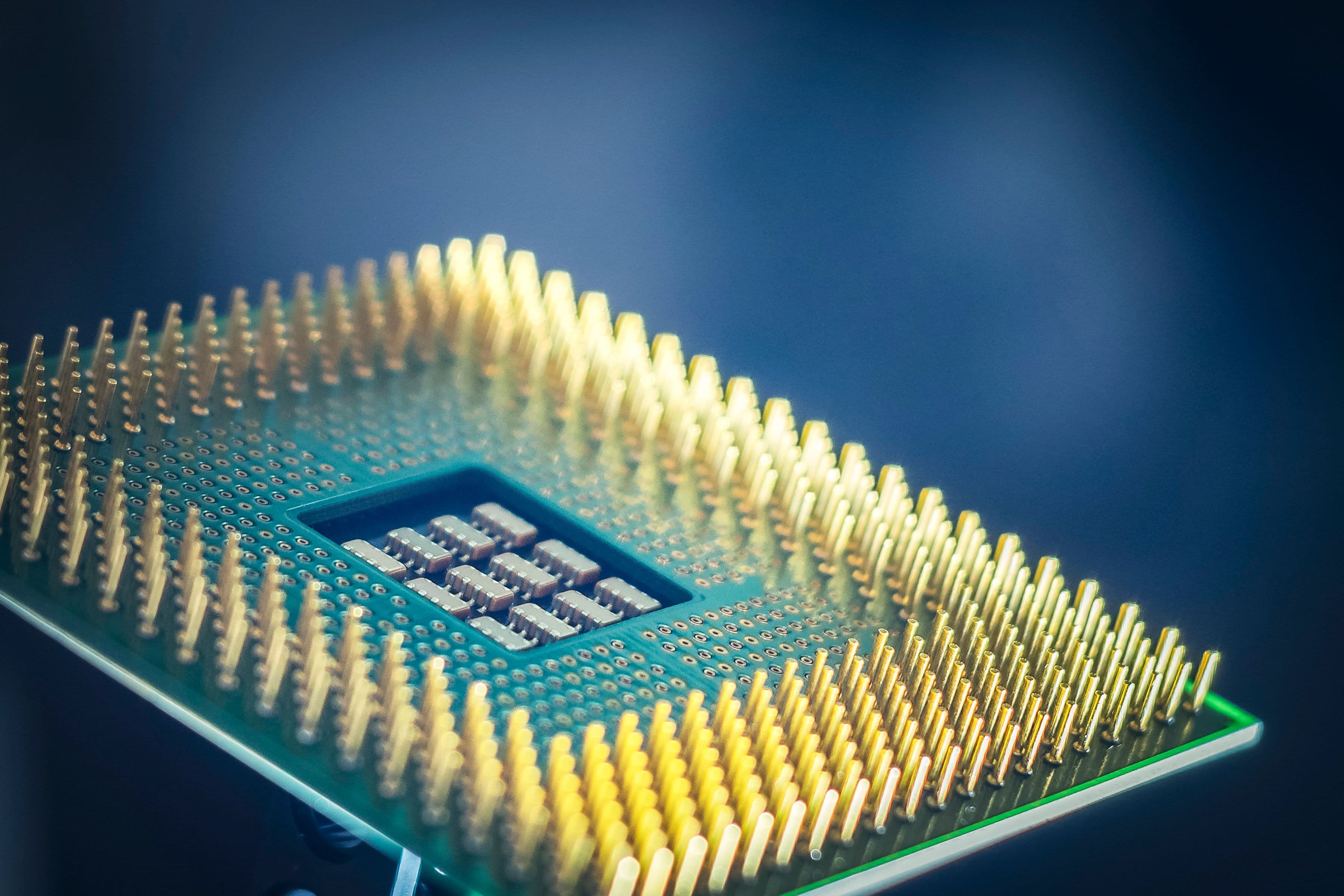
Japan's Sumitomo Bakelite Expands China Chip Packaging Output to Meet AI Hardware Demand
Sumitomo Bakelite is scaling up production of chip packaging materials at its China facilities specifically to meet surging demand driven by AI accelerator manufacturing. Chip packaging — including substrates, encapsulants, and underfill materials — is a critical and often overlooked bottleneck in AI hardware supply chains, as advanced packaging techniques like CoWoS and SoIC are required for chips like NVIDIA's H100 and B100 series. This expansion signals that materials suppliers are now investing ahead of demand curves, reflecting confidence that AI hardware build-out will sustain high volumes for multiple years. For developers and infrastructure engineers tracking AI compute availability and cost, materials supply constraints have historically been an underappreciated factor in GPU pricing and lead times. The move also highlights how AI hardware demand is reshaping global manufacturing investment well beyond chip fabs themselves.
Tech - South China Morning Post

Databricks Details Lakebase Branching for Parallel Coding Agents
Databricks has detailed Lakebase Branching, a new capability in its Lakebase product that enables parallel coding agents to work on isolated database branches simultaneously without conflicting state. This is directly analogous to Git branching but applied to live data environments, solving a fundamental coordination problem when multiple AI agents need to read and write data in parallel. For developers building multi-agent systems that interact with databases — a common pattern in agentic data pipelines — this removes a major serialization bottleneck that forces agents to work sequentially. The feature is particularly relevant to teams running agent-based ETL, code generation with data dependencies, or automated testing pipelines against live datasets. This positions Databricks as infrastructure for the agentic era, not just a data warehouse.
Databricks
Lava Discovers Thousands of Exposed GPU Servers and High-Severity NVIDIA Monitoring Flaw
Security researchers at Lava have uncovered thousands of GPU servers exposed to the public internet without proper access controls, alongside a high-severity vulnerability in NVIDIA's DCGM Exporter, a widely used GPU monitoring tool. The DCGM Exporter flaw could allow unauthorized actors to access sensitive GPU telemetry data or interfere with monitoring infrastructure in AI training and inference environments. The scale of exposed GPU servers suggests that many organizations deploying AI compute infrastructure are not applying standard network hardening practices. For developers and MLOps teams managing GPU clusters — whether on-premises or in the cloud — this research is a direct call to audit network exposure and patch DCGM Exporter installations. The findings highlight that AI infrastructure security is lagging behind the rapid pace of GPU deployment.
NVIDIA
Architect Launches Liquid Inference: A Real-Time Auction Market for LLM Inference
Architect has launched Liquid Inference, a real-time auction-based marketplace that matches LLM inference demand with available compute supply across providers. Rather than locking developers into a single inference provider at fixed pricing, Liquid Inference dynamically routes requests to the lowest-cost available compute at any given moment. This introduces market-based pricing to a layer of the AI stack that has historically been dominated by opaque, static rate cards from major cloud providers. For cost-sensitive teams running high inference volumes, the potential savings and flexibility could be significant, particularly during off-peak periods when compute is abundant. Developers integrating Liquid Inference should evaluate latency implications of dynamic routing against the cost optimization benefits for their specific workloads.
MarkTechPost
Meta AI Open-Sources Rebalancer: C++ Assignment Solver Running 40 Million Placement Problems Daily
Meta AI has open-sourced Rebalancer, a high-performance C++ assignment solver that runs approximately 40 million resource placement and scheduling problems per day within Meta's production infrastructure. The tool is designed to optimize large-scale workload distribution across compute clusters, addressing the kind of combinatorial assignment problems that arise in fleet management, data center scheduling, and distributed systems. For infrastructure engineers and developers managing large-scale deployments, Rebalancer offers a battle-tested, production-grade solver that has been validated at one of the world's largest compute scales. Open-sourcing it gives the broader community access to Meta's internal scheduling logic, which could be adapted for cloud resource optimization, job scheduling, and similar systems problems. The release reflects Meta's continued investment in open-sourcing infrastructure tooling alongside its AI model work.
Meta AI
NVIDIA and Microsoft Launch RTX Spark and Expanded AI Agent Support for Windows PCs
NVIDIA and Microsoft jointly announced RTX Spark, a new local AI compute initiative, alongside expanded AI agent capabilities for Windows at a dedicated hardware event. The Surface RTX Spark Dev Box, targeted at developers needing local AI inference, is now available for preorder at $5,999. Microsoft is simultaneously giving Copilot deeper system-level control over Windows, including file management and search, representing a meaningful step toward always-on agentic OS integration. For developers, RTX Spark provides a dedicated local inference platform that reduces reliance on cloud APIs for latency-sensitive or privacy-sensitive workloads. This signals a broader industry push to make the PC a first-class AI development and deployment target.
NVIDIA
Building a Streaming Robotics Learning Pipeline With NVIDIA Cosmos3-DROID
NVIDIA's Cosmos3-DROID is being used to construct streaming robotics learning pipelines, enabling continuous data ingestion and model updating for robotic systems in near-real-time. The tutorial-style coverage walks through how to architect a pipeline that feeds robot sensory and action data into Cosmos3-DROID's world model framework for ongoing skill acquisition. For developers working on embodied AI or robotics applications, this approach significantly reduces the latency between real-world experience collection and model improvement compared to batch training workflows. NVIDIA's Cosmos platform is positioning itself as infrastructure for physical AI, and Cosmos3-DROID specifically targets robot learning at scale. Teams exploring sim-to-real transfer or continuous robot learning pipelines should evaluate how Cosmos3-DROID's streaming capabilities fit their data infrastructure.
NVIDIA
NVIDIA's IsaacTeleop Brings Graph-Based Retargeting to Robot Teleoperation
NVIDIA has detailed IsaacTeleop, a teleoperation system within the Isaac robotics platform that translates hand and controller tracking data into robot actions using a graph-based retargeting engine. The graph-based approach allows flexible mapping between human hand configurations and diverse robot end-effector morphologies, making it easier to collect high-quality demonstration data across different robot hardware without rewriting motion mapping logic. This is directly relevant to developers and researchers building data pipelines for imitation learning and reinforcement learning from human demonstrations, since high-fidelity teleoperation data is a key bottleneck in physical AI training. IsaacTeleop integrates with the broader Isaac Sim and Isaac Lab ecosystem, meaning teams already using NVIDIA's simulation stack can adopt it incrementally. As embodied AI and humanoid robotics attract more investment, tooling that standardizes the human-to-robot interface layer will be increasingly foundational.
NVIDIA
US Arrests Tech CEO Accused of Smuggling $300M in Nvidia Chips into China
US authorities have arrested a technology company CEO on charges of smuggling approximately $300 million worth of Nvidia chips into China in violation of US export controls. The case represents one of the largest alleged chip export violations on record and underscores the high-stakes enforcement environment surrounding advanced AI compute hardware. For the AI industry, this signals that US export control enforcement is intensifying and that the regulatory perimeter around frontier AI hardware is being actively policed, not just legislated. Companies involved in hardware procurement, distribution, or resale — particularly with any international exposure — face heightened compliance risk. The arrest also reflects the geopolitical premium placed on Nvidia's advanced GPU architectures as a strategic AI resource.
NVIDIA
NVIDIA DGX Spark 64GB Expands Local AI Development Options for Developers
NVIDIA has announced a 64GB memory configuration of the DGX Spark, its compact workstation designed for running large AI models locally, giving developers more headroom for loading and fine-tuning larger models without cloud dependency. The expanded memory tier directly addresses a key bottleneck for engineers working with frontier-scale models locally, enabling workloads that previously required datacenter-class hardware or cloud APIs. For teams prioritizing data privacy, low-latency inference, or offline development workflows, the DGX Spark 64GB meaningfully changes the local AI compute landscape. NVIDIA is also emphasizing synchronization features that help developers scale from local prototyping to cloud or datacenter deployment. This is a concrete hardware option for organizations wanting to reduce cloud inference costs while maintaining serious model capability.
NVIDIA
SoftBank Closes Third $10B OpenAI Investment Tranche Using Senior Notes Proceeds
SoftBank has completed its third $10 billion investment tranche into OpenAI, funded through proceeds from a senior notes offering, bringing its total committed capital to OpenAI to $30 billion. This closing reflects continued institutional conviction in OpenAI's trajectory even as the company navigates its ongoing restructuring to a for-profit entity. For developers and platform teams building on OpenAI APIs, sustained mega-scale investment signals that compute expansion, model development, and API reliability are well-funded through the near term. The senior notes structure also indicates SoftBank is using debt instruments to finance the position, suggesting the investment is being treated as a long-duration strategic bet rather than a liquid portfolio holding. This level of capital concentration in a single AI provider is a relevant factor for teams assessing vendor lock-in risk.
OpenAI
NVIDIA AI Factories: Productive, Durable, and Fungible Infrastructure for Maximum ROI
NVIDIA has published a detailed framework outlining how its AI Factory architecture is designed around three principles — productivity, durability, and fungibility — to maximize return on compute investment for enterprise and cloud operators. Fungibility is the most technically novel aspect: the argument that NVIDIA GPU clusters can be redeployed across training, inference, and simulation workloads without hardware reconfiguration, reducing idle capacity and improving utilization economics. This framing is aimed directly at CFOs and infrastructure architects evaluating large-scale AI compute purchases, but the technical implications matter for MLOps teams designing cluster allocation strategies. Developers managing multi-tenant GPU infrastructure should understand the fungibility argument as it increasingly shapes how cloud providers price and allocate GPU time. The piece also signals NVIDIA's strategic positioning of its full-stack AI Factory offering against competing architectures from custom silicon vendors.
NVIDIA
Introducing OLMo-Core 3: Open Scalable Training Infrastructure for Large MoEs
Allen Institute for AI has released OLMo-Core 3, an open training framework specifically engineered for large Mixture-of-Experts models, now available on Hugging Face. The release includes modular components for distributed training, routing strategies, and checkpointing that are designed to scale to frontier model sizes while remaining auditable and reproducible. For researchers and teams training their own MoE architectures, OLMo-Core 3 provides a reference implementation that is explicitly open and inspectable — a meaningful alternative to closed training stacks. The framework integrates with existing HuggingFace tooling, lowering the barrier for adoption within the open-source research community. This is particularly relevant as MoE architectures become the default choice for state-of-the-art open models.
Hugging Face
Cloudflare Releases Clef and Clef-Flash: Open-Weight Decision Models Returning Typed Probabilities
Cloudflare has open-weighted Clef and Clef-Flash, a new class of decision models that output typed probabilities rather than free-form text, designed for classification, routing, and guardrail tasks at inference time. Unlike generative LLMs used for classification, these models produce structured probabilistic outputs directly, enabling deterministic downstream logic without parsing or prompt engineering. This architecture is particularly well-suited for content moderation pipelines, request routing in agentic systems, and low-latency classification layers in API middleware. Clef-Flash is the smaller, faster variant optimized for edge deployment, aligning with Cloudflare's Workers AI infrastructure. Developers building safety layers or routing logic on top of LLMs should evaluate these as lighter-weight, more predictable alternatives to using full generative models for binary or categorical decisions.
Cloudflare
Cerebras Reports 5X Inference Throughput Gain From Prefill-Decode Disaggregation
Cerebras has published results showing a 5x inference throughput improvement achieved through disaggregation — separating the prefill and decode phases of LLM inference onto dedicated compute resources. This architectural approach reduces the latency penalty that prefill imposes on decode batches, enabling higher sustained token-per-second rates at scale. The technique is increasingly critical as production deployments push toward real-time agentic workloads where latency directly affects user experience. Developers running high-concurrency inference pipelines should evaluate whether their current serving stacks support disaggregated prefill-decode, as the gains at scale are substantial. This result positions Cerebras hardware as increasingly competitive for throughput-sensitive enterprise deployments.
Unite.AI
NVIDIA and CoreWeave Partner to Close the Loop Between AI Training and Agentic Production
NVIDIA and CoreWeave have announced a deepened partnership aimed at providing a unified infrastructure path from model training through to production deployment of agentic AI workloads, centered on NVIDIA's Vera Rubin architecture. The collaboration is designed to eliminate the friction developers currently experience when moving from training environments to production-grade agentic systems, which often require different infrastructure stacks. CoreWeave's cloud platform will offer tightly integrated NVIDIA hardware and software, enabling developers to use the same stack across the full model lifecycle. For teams building autonomous agents at scale, this reduces the operational complexity of managing heterogeneous compute environments. The partnership signals that agentic AI is now a first-class deployment target for major cloud and hardware vendors, not just a research curiosity.
NVIDIA

DeepSeek Open-Sources Tools to Run AI on Huawei Chips, Reducing NVIDIA Dependency
China's DeepSeek has open-sourced a set of tools and optimizations specifically designed to enable high-performance AI inference and training on Huawei's Ascend chips, directly targeting NVIDIA's dominance in AI compute hardware. The release is strategically significant as it lowers the technical barrier for Chinese AI developers and organizations under export-control pressure to migrate workloads away from NVIDIA GPUs. For developers building on open-source models, this contributes to a growing ecosystem of non-NVIDIA inference tooling, with DeepSeek serving as both a model producer and an infrastructure contributor. The move also accelerates the bifurcation of the global AI hardware stack, with Western and Chinese ecosystems increasingly diverging at the chip and tooling layer. Engineers evaluating multi-cloud or multi-hardware deployment strategies should monitor whether these tools gain adoption beyond China's domestic market.
South China Morning Post

AMD Acquires World Labs, Fei-Fei Li's World Models Startup, to Challenge NVIDIA
AMD has acquired World Labs, the AI startup founded by Fei-Fei Li focused on large world models and spatial intelligence, in a move explicitly framed as escalating competition against NVIDIA in the AI hardware and systems market. World Labs was building models capable of understanding and generating 3D spatial representations of the world, a capability with significant implications for robotics, simulation, and physical AI applications. For AMD, the acquisition brings both cutting-edge model research talent and a differentiated AI research agenda to pair with its GPU hardware roadmap. Developers building on AMD platforms or targeting physical AI and simulation use cases should watch how World Labs technology gets integrated into AMD's ecosystem. This acquisition signals AMD's intent to compete not just on chips but on the full AI systems stack.
Ars Technica

AMD Acquires Li Fei-Fei's World Labs in Deal Worth Over $8 Billion
AMD has agreed to acquire World Labs, the spatial intelligence startup founded by Stanford AI professor and 'godmother of AI' Fei-Fei Li, in a deal valued at more than $8 billion. World Labs focuses on building large world models — systems that can understand and reason about 3D spatial environments — which would give AMD a significant AI research capability to rival NVIDIA's in-house model work. The acquisition signals that AMD is moving beyond chip manufacturing to compete at the full-stack AI level, integrating frontier research directly into its hardware roadmap. For developers building on AMD silicon, this could eventually translate into tighter co-design between world models and AMD's GPU and CPU architectures. The deal also raises the strategic stakes in the AMD-NVIDIA competition, as both companies now have substantial internal AI research arms alongside their hardware businesses.
The Verge
NVIDIA Launches Open Agent Safety Platform to Contain Rogue Agents in Milliseconds
NVIDIA has unveiled an open agent safety platform consisting of two components: OpenShell, which sandboxes AI agents running on Vera CPUs, and Sentry, which runs on BlueField-4 SmartNICs and can quarantine misbehaving agents within milliseconds at the network layer. The platform is designed to address the growing risk of agent misalignment in production deployments, where an agent that deviates from intended behavior could cause cascading harm before a human operator can intervene. By operating at the hardware and network layers rather than purely in software, the system aims to provide containment guarantees that application-layer safeguards cannot reliably offer. For developers shipping agentic systems into enterprise or critical infrastructure, this represents a meaningful new layer of defense-in-depth. The open nature of the platform suggests NVIDIA intends it to become a baseline standard, which could drive adoption across cloud providers and on-premises deployments.
NVIDIA
Cloudflare CEO Matthew Prince on Protecting the Web from AI Crawlers and the Collapse of Web Advertising
Cloudflare CEO Matthew Prince is publicly discussing the existential threat AI crawlers and zero-click AI answers pose to the web's advertising-based economic model, and what Cloudflare is doing to give publishers and site owners tools to respond. The conversation centers on how AI systems consuming web content without driving traffic undermines the incentive structure that funds open web content creation. For developers building web-dependent products or working on content platforms, this tension directly affects the sustainability of the data ecosystems their applications rely on. Cloudflare's position as infrastructure for a significant portion of the web means its policy and tooling decisions here will have outsized practical impact. This is a key strategic and infrastructural debate that developers building on or for the open web should be tracking.
The Verge
China Overtakes US as Top Workplace for Elite AI Researchers
A new study finds that China has surpassed the United States as the leading workplace destination for elite AI researchers, a milestone in the global AI talent race. This shift reflects years of investment in Chinese AI institutions and competitive compensation at major Chinese AI labs and universities. For the broader AI development ecosystem, this has implications for where frontier research is produced and which organizations will have first access to breakthrough findings. It also intensifies the geopolitical dimension of AI development, particularly as US export controls and visa restrictions have reportedly accelerated the trend. Developers and organizations tracking the global AI research pipeline should expect an increasingly China-origin share of influential papers and model architectures.
South China Morning Post
Google CEO Sundar Pichai Announces Project Suncatcher to Test AI Compute in Space
Google CEO Sundar Pichai announced Project Suncatcher, an initiative to test running AI compute — specifically TPUs — in a space environment. This is a notable infrastructure experiment exploring whether orbital deployment of AI hardware is viable, potentially unlocking solar-powered, latency-independent compute nodes. For AI infrastructure engineers, this represents an early signal that hyperscalers are beginning to explore post-terrestrial compute architectures. While still experimental, the use of Google's proprietary TPU hardware in this context underscores how far the infrastructure conversation has moved beyond traditional data centers. Developers building large-scale AI pipelines should track this as a long-horizon compute diversification signal.
Alibaba Unveils AI Roadmap Focused on Monetization and Infrastructure Efficiency
Alibaba has outlined a 'pragmatic' AI roadmap centered on driving monetization from its AI investments and improving the efficiency of its underlying AI infrastructure, signaling a shift from pure capability expansion toward commercial sustainability. The roadmap addresses how Alibaba plans to turn its Qwen model family and cloud AI services into revenue-generating products across enterprise and consumer segments. For developers building on Alibaba Cloud or using Qwen models, this suggests continued investment in API services and developer tooling as the company doubles down on its AI platform strategy. The framing around infrastructure efficiency also implies continued work on inference cost reduction, which could benefit developers using Alibaba's hosted AI services. This positions Alibaba as a serious long-term AI platform player in Asia, with implications for developers seeking alternatives to US-based model providers.
South China Morning Post
Google's Suncatcher Orbital Data Center Test Launches October 1
Google is launching its first Suncatcher orbital data center test module on October 1, a project aimed at processing data in low Earth orbit using solar-powered compute infrastructure. The test will evaluate the viability of running AI inference workloads in space, where solar energy is abundant and terrestrial land and power constraints don't apply. For developers and infrastructure architects, this represents a genuinely novel compute geography — one that could eventually factor into latency, sovereignty, and energy efficiency calculations for global AI deployments. If successful, orbital compute could open new options for edge AI in remote or maritime regions with poor terrestrial connectivity. The launch represents a long-horizon bet by Google on infrastructure diversification at a time when data center energy constraints are intensifying.
Ars Technica
California Bills Would Force Data Centers to Disclose Water and Electricity Usage
California is advancing legislation that would require data centers to publicly disclose their water and electricity consumption, with AI infrastructure operators likely to face significant new reporting obligations. The bills target the rapid expansion of AI compute infrastructure, which has driven substantial increases in energy and water usage across the state. For developers and companies operating or procuring cloud AI compute, this represents a meaningful regulatory shift that could affect infrastructure cost transparency and vendor selection. If passed, the disclosure requirements could also accelerate pressure on hyperscalers to publish cleaner sustainability metrics and invest in efficiency improvements. Developers building large-scale AI systems should factor emerging regulatory overhead into their infrastructure planning as similar legislation may spread to other states.
The Verge
NVIDIA Warp and MjWarp Tutorial: Accelerating Robotics Simulation and Learning
Hugging Face has published a detailed technical guide on using NVIDIA Warp and MjWarp to accelerate robotics simulation and reinforcement learning workflows. NVIDIA Warp is a Python framework for GPU-accelerated simulation, and MjWarp brings MuJoCo physics into the Warp ecosystem — enabling faster-than-real-time parallel simulation critical for training robotic policies. The tutorial walks through setup, integration, and practical workflow patterns relevant to anyone building embodied AI systems or sim-to-real transfer pipelines. This is highly relevant for developers working on robotics, physical AI, or any reinforcement learning application requiring high-throughput environment simulation. The Hugging Face collaboration with NVIDIA here highlights the growing overlap between the open-source ML ecosystem and high-performance robotics infrastructure.
Hugging Face
Google DeepMind Advances Private AI Compute with Secure Server-Side Memory
Google DeepMind has published new work on private AI compute, detailing a framework for secure server-side memory that protects sensitive data during inference. The approach addresses a core concern for enterprise AI deployments: ensuring that model inputs and outputs remain confidential even when processed on shared infrastructure. For developers building regulated-industry applications — healthcare, finance, legal — this represents an important architectural development that could unlock new deployment scenarios previously blocked by compliance requirements. The work builds on existing confidential computing trends and signals DeepMind's intention to make privacy-preserving AI a first-class engineering concern. Developers should follow the technical details closely as this could inform how secure inference infrastructure evolves across cloud providers.
Google DeepMind
Alibaba Teases 10-Trillion-Parameter Model and Debuts New AI Chip
Alibaba has teased a 10-trillion-parameter AI model and unveiled what it describes as China's most powerful AI chip, representing a significant escalation in the Chinese AI compute and model race. The parameter count, if accurate at inference scale, would place the model among the largest ever disclosed publicly, though details on architecture, training efficiency, and actual deployment readiness remain sparse. For developers and researchers tracking frontier model capabilities globally, Alibaba's announcement signals that Chinese labs are pursuing scale aggressively alongside chip self-sufficiency. The chip debut is particularly notable in the context of US export controls, suggesting Alibaba is advancing domestic silicon to reduce dependency on restricted hardware. Developers building internationally deployed applications should monitor how Alibaba's model family evolves in capability and API availability over the coming months.
South China Morning Post

California Tightens Rules on AI Data Center Energy and Water Use
California has passed new legislation imposing stricter requirements on AI data centers regarding energy consumption and water use, targeting the growing environmental footprint of large-scale AI infrastructure. The bills introduce mandatory reporting thresholds, efficiency standards, and water usage limits that will apply to facilities operating within the state, which hosts a significant concentration of hyperscale AI compute. For developers and organizations planning or operating AI infrastructure in California, this creates new compliance obligations that could affect facility planning, cooling architecture choices, and operational costs. The regulation also sets a policy precedent that other states and jurisdictions may follow, making it a leading indicator of the regulatory environment developers will face in the medium term. Teams evaluating data center locations for new AI infrastructure buildouts should factor California's evolving compliance landscape into their decision-making.
The Verge
NVIDIA Details Safety Architecture for Physical AI Deployment at Scale with HALOS
NVIDIA has published a detailed breakdown of HALOS, its layered safety framework for deploying physical AI systems — including robots and autonomous vehicles — at production scale. HALOS is designed to enforce safety guarantees at every layer of the physical AI stack, from sensor input validation through planning and actuation, addressing the unique failure modes that arise when AI systems interact with the physical world. For developers working on robotics, warehouse automation, or autonomous systems, this represents a concrete reference architecture for building safety-critical AI pipelines that can meet real-world deployment requirements. The framework also signals NVIDIA's broader ambition to own the physical AI infrastructure stack, complementing its software platforms like Isaac and Omniverse. Teams evaluating NVIDIA's robotics ecosystem should understand HALOS as a foundational safety layer they will need to integrate with.
NVIDIA
Humans Remain the Biggest Cybersecurity Risk to Energy Systems, Not Rogue AI
A new report covered by The Verge finds that human error and insider threats — not autonomous AI systems going rogue — continue to represent the primary cybersecurity risk to energy and critical infrastructure systems. The analysis pushes back against AI threat narratives that center on autonomous AI attackers, while acknowledging that AI is increasingly being used as a tool to enhance human-executed attacks. For security engineers and AI practitioners working in or adjacent to critical infrastructure, the practical takeaway is that AI-assisted phishing, social engineering, and credential attacks deserve more defensive investment than autonomous AI agent threats in the near term. The findings align with a broader expert consensus that current AI capabilities amplify human attackers rather than replace them. Developers building AI tools that touch sensitive sectors should factor in this human-vector threat model when designing access controls and audit systems.
AI | The Verge
US Weighs Cloud Computing Restrictions That Could Force China's AI Sector to Adapt
The United States is actively evaluating new restrictions on cloud computing access that could further limit Chinese AI companies' ability to use American cloud infrastructure for training and deploying AI models. This follows previous export controls on advanced chips and expands the potential chokepoints in the US-China AI competition to include software and cloud services layers. For developers at US-based cloud providers or companies operating in both markets, these potential rules could affect API availability, data residency requirements, and cross-border model serving agreements. The restrictions would likely accelerate Chinese investment in domestic cloud and compute infrastructure, potentially reshaping the global AI supply chain over the next few years. Engineers building globally deployed AI services should monitor this closely as compliance requirements could materially affect architecture decisions.
Tech - South China Morning Post

Chinese AI Chipmaker Hygon Plots Expansion from Data Centers into Robotics
Chinese AI chipmaker Hygon has announced plans to expand beyond its current data center focus and move into the robotics chip market, signaling a strategic diversification as competition in AI inference hardware intensifies. Hygon is one of China's primary domestic alternatives to NVIDIA GPUs and has gained ground amid ongoing US export restrictions. The robotics expansion suggests Hygon is positioning for the growing edge AI and physical AI markets, where purpose-built silicon for real-time inference in mobile platforms is increasingly demanded. For developers and infrastructure teams tracking AI hardware supply chains, Hygon's moves are relevant given the geopolitical constraints shaping GPU availability in Asia-Pacific markets. The expansion also reflects the broader convergence of data center and robotics AI workloads that is driving new chip architectures globally.
Tech - South China Morning Post
Flet 1.0 Released: Build Production-Ready Web, Desktop, and Mobile Apps in Pure Python
Flet 1.0 has reached a stable production release, enabling developers to build cross-platform web, desktop, and mobile applications using Python alone — no JavaScript, Dart, or native mobile SDKs required. The framework is built on Flutter under the hood, giving Python developers access to a rich, performant widget system without leaving the Python ecosystem. For AI engineers who routinely prototype in Python, Flet 1.0 significantly lowers the barrier to shipping polished, multi-platform interfaces for AI-powered tools and demos without switching languages or frameworks. The 1.0 milestone signals API stability, making it viable for production use cases beyond quick prototypes. Developers building internal AI tooling, LLM front-ends, or agent dashboards in Python should evaluate Flet as an alternative to Gradio, Streamlit, or Electron-based approaches.
MarkTechPost