nvidia
50 briefs tagged nvidia, most recent first
Today's briefs

NVIDIA Releases Cosmos3-H-Dreams Real-Time Surgical World Model
NVIDIA has released Cosmos3-H-Dreams, a generative world model purpose-built for clinical surgical simulation, capable of producing real-time synthetic video of surgical procedures. The model is trained on surgical footage and clinical data, and can generate photorealistic simulations of instrument interactions, tissue response, and procedural steps that can be used for training, planning, or robotic surgery systems. For robotics and medical AI developers, this represents a significant step toward using generative simulation as a data flywheel — creating synthetic training data for surgical robots without requiring expensive real-world collection. Cosmos3-H-Dreams is hosted on Hugging Face and integrated with NVIDIA's Cosmos platform, making it accessible through standard API and model-serving interfaces. The release signals that domain-specific world models are maturing beyond autonomous driving into high-stakes clinical environments.
NVIDIA

CoreWeave's Debt Load Is Creating Systemic Risk Across the AI Industry
CoreWeave, one of the largest GPU cloud providers powering AI workloads, is carrying a debt structure that analysts and industry observers now view as a potential source of contagion risk for the broader AI infrastructure sector. The company's aggressive borrowing to fund GPU acquisition during the AI boom has left it exposed to shifts in demand, interest rates, or customer churn in ways that could affect the availability and pricing of compute for the companies depending on it. For developers and AI companies whose infrastructure runs on CoreWeave, this raises practical questions about supply reliability, contract terms, and contingency planning. The situation illustrates the fragility that can emerge when a critical layer of AI infrastructure is heavily leveraged rather than equity-funded. Infrastructure diversification — spreading compute across multiple providers — looks increasingly prudent given this dynamic.
The Verge

NVIDIA Open-Sources Run:ai GPU Orchestration Platform Under Apache 2.0
NVIDIA has released Run:ai, its Kubernetes-native GPU orchestration and scheduling platform, as open source under the Apache 2.0 license. Run:ai was previously a proprietary product NVIDIA acquired in 2024, offering dynamic GPU resource allocation, workload queuing, and multi-tenant cluster management for AI training and inference workloads. Opening it under Apache 2.0 means teams can now self-host, modify, and integrate it into existing Kubernetes infrastructure without licensing costs or vendor lock-in. For ML platform engineers, this is a significant operational tool — it enables fine-grained GPU sharing, fractional GPU allocation, and priority-based scheduling that raw Kubernetes lacks out of the box. Teams running large-scale training jobs or multi-team GPU clusters should evaluate Run:ai as a drop-in upgrade to their current orchestration stack.
NVIDIA

NVIDIA Launches RTX Spark for Local AI on Windows PCs Across Six Global Cities
NVIDIA marked the RTX Spark launch with simultaneous events in six global cities, celebrating a new wave of Windows laptops designed to run local AI workloads on-device using RTX GPU acceleration. RTX Spark is positioned as NVIDIA's platform push for local inference, enabling developers and end users to run LLMs, diffusion models, and other AI workloads without cloud dependency. For developers, this means a growing installed base of capable local AI hardware that can serve as a deployment target for on-device inference applications, reducing latency and privacy concerns associated with cloud-routed inference. The global rollout signals NVIDIA's intent to normalize local AI as a mainstream consumer and developer expectation, not just an enthusiast use case. This expands the surface area for locally-deployed agentic and generative AI apps across the Windows ecosystem.
NVIDIA

NVIDIA RTX Spark Laptops Launch Worldwide With Local AI Agent Support
NVIDIA's RTX Spark laptop lineup has launched globally, with a key feature being native support for running AI agents locally without cloud dependency. The hardware is designed around NVIDIA's latest mobile GPUs and includes software infrastructure for deploying agentic workloads directly on-device, targeting developers and power users who need privacy, latency, or cost advantages over cloud-based AI APIs. This is part of NVIDIA's broader push to make consumer and prosumer hardware viable for serious local AI inference and agent execution. For developers building or testing agentic applications, RTX Spark laptops offer a new tier of local compute that could meaningfully reduce reliance on hosted inference endpoints during development. The launch also marks a new era of AI-first laptop positioning, where agent support is a first-class hardware marketing feature.
NVIDIA
NVIDIA RTX Spark Local AI Laptop Platform Launches With Windows Optimizations
NVIDIA is launching the RTX Spark platform, a new category of AI-optimized laptops designed to run local AI workloads at the edge, with Microsoft engineering Windows-level optimizations specifically for the hardware. The platform targets developers and professionals who need capable local inference without cloud dependency, with applications ranging from on-device LLM inference to AI-enhanced productivity tools. Microsoft's Windows integration includes low-level optimizations visible even in applications like Notepad, signaling a deep co-engineering effort rather than a surface-level marketing partnership. For developers, RTX Spark represents a meaningful expansion of the local AI compute tier, potentially enabling workloads previously requiring cloud GPUs to run on portable hardware. The launch positions NVIDIA and Microsoft to capture the growing demand for private, low-latency AI computation outside of data centers.
NVIDIA
NVIDIA and Hugging Face Open 2.8 Trillion Token Indic Pretraining Corpus With Full Pipeline
NVIDIA has released a 2.8-trillion-token Indic language pretraining corpus alongside a fully open data generation pipeline, published on Hugging Face. The dataset covers a wide range of Indic languages and is accompanied by the tooling needed to reproduce, extend, or adapt the pipeline for other low-resource language families. This is one of the largest publicly available non-English pretraining datasets, addressing a significant gap in multilingual AI development resources. For developers building applications targeting South Asian language markets, this corpus provides a foundation for training or fine-tuning models without constructing datasets from scratch. The open pipeline is particularly valuable, as it enables teams to apply the same methodology to other underrepresented languages.
NVIDIA
NVIDIA Releases Nemotron 3.5 Super VL: 120B Open Multimodal Agent Model
NVIDIA has launched Nemotron 3.5 Super VL, a 120-billion-parameter open multimodal model designed for agentic workloads spanning data center and desktop deployments. The model sits at the top of NVIDIA's expanded Nemotron family alongside new Bolt models optimized for efficiency, targeting developers building vision-language agent pipelines. As an open model, it can be fine-tuned and self-hosted, making it particularly relevant for enterprise teams requiring data privacy or custom deployment configurations. The Super VL designation signals strong multimodal reasoning capabilities suited for tasks like document understanding, visual question answering, and agentic tool use. Developers can access the model weights through Hugging Face as part of NVIDIA's broader push to offer open alternatives across the capability spectrum.
NVIDIA
European Cities Deploy NVIDIA-Powered AI Agents for Urban Operations
Multiple European cities have begun deploying AI agent systems built on NVIDIA's infrastructure to manage and optimize urban operations, including traffic, utilities, and public services. This represents one of the larger-scale real-world rollouts of agentic AI in a non-commercial, civic context, with NVIDIA serving as the underlying compute and software platform. The deployments use NVIDIA's AI Enterprise stack and agent frameworks, making this relevant to developers building large-scale, real-time decision-making systems on NVIDIA hardware. For engineers working on infrastructure automation or multi-agent coordination, city-scale deployments provide a concrete benchmark for the latency, reliability, and coordination requirements such systems must meet. This also signals that municipal governments are becoming active buyers of AI agent platforms, opening a new enterprise vertical.
NVIDIA

NVIDIA RTX Spark Laptop Platform Gains Broad PC App Ecosystem Support
NVIDIA has announced that its RTX Spark platform for local AI on laptops now has broad software ecosystem support across major PC applications, marking a readiness milestone for on-device AI workloads on consumer and professional hardware. The update covers software integrations across productivity, creative, and developer tools, effectively lowering the barrier for end-users to run local AI inference without cloud dependency. For developers building local-first AI applications, RTX Spark represents an increasingly viable deployment target with a growing installed base of capable hardware. Teams shipping desktop or workstation AI tools should review the updated compatibility list to understand which software frameworks and runtimes are now certified for the platform. This is part of NVIDIA's broader push to make local AI inference a mainstream option alongside cloud-hosted models.
NVIDIA
NVIDIA Opens Vera Rubin Architecture to Scale AI Factories at OCP Global Summit
NVIDIA has opened up its Vera Rubin GPU architecture at the OCP Global Summit, enabling ecosystem partners to build and scale AI factory infrastructure around the platform. The move is designed to accelerate adoption of Vera Rubin across hyperscalers, ODMs, and enterprise data center operators by publishing architectural specifications through the Open Compute Project. This is a strategic shift: by opening the architecture, NVIDIA invites broader hardware ecosystem integration while cementing Vera Rubin as the reference platform for next-generation AI compute. Developers and infrastructure engineers planning future AI cluster deployments should note that Vera Rubin-based systems are now being built by multiple vendors, improving supply diversity. Companion announcements from Wiwynn and ASUS at the same summit show hardware partners moving quickly to productize the platform.
NVIDIA
Microsoft's Maia 300 Chip Rolls Out, Reducing Reliance on NVIDIA GPUs
Microsoft has begun deploying its Maia 300 AI accelerator chip, a significant step in its strategy to reduce dependence on NVIDIA's GPU supply chain for running AI workloads at scale. The Maia 300 is designed to handle inference workloads across Microsoft's cloud infrastructure, directly powering services like Azure AI and Copilot. This move has meaningful implications for developers on Azure: Microsoft now has more control over compute availability, pricing, and latency for AI inference services, potentially improving reliability. It also signals a broader industry shift where hyperscalers are building custom silicon as a strategic moat, following Google's TPU and Amazon's Trainium/Inferentia path. Developers should monitor whether Maia 300 deployments translate into updated Azure AI service tiers or pricing changes.
Microsoft
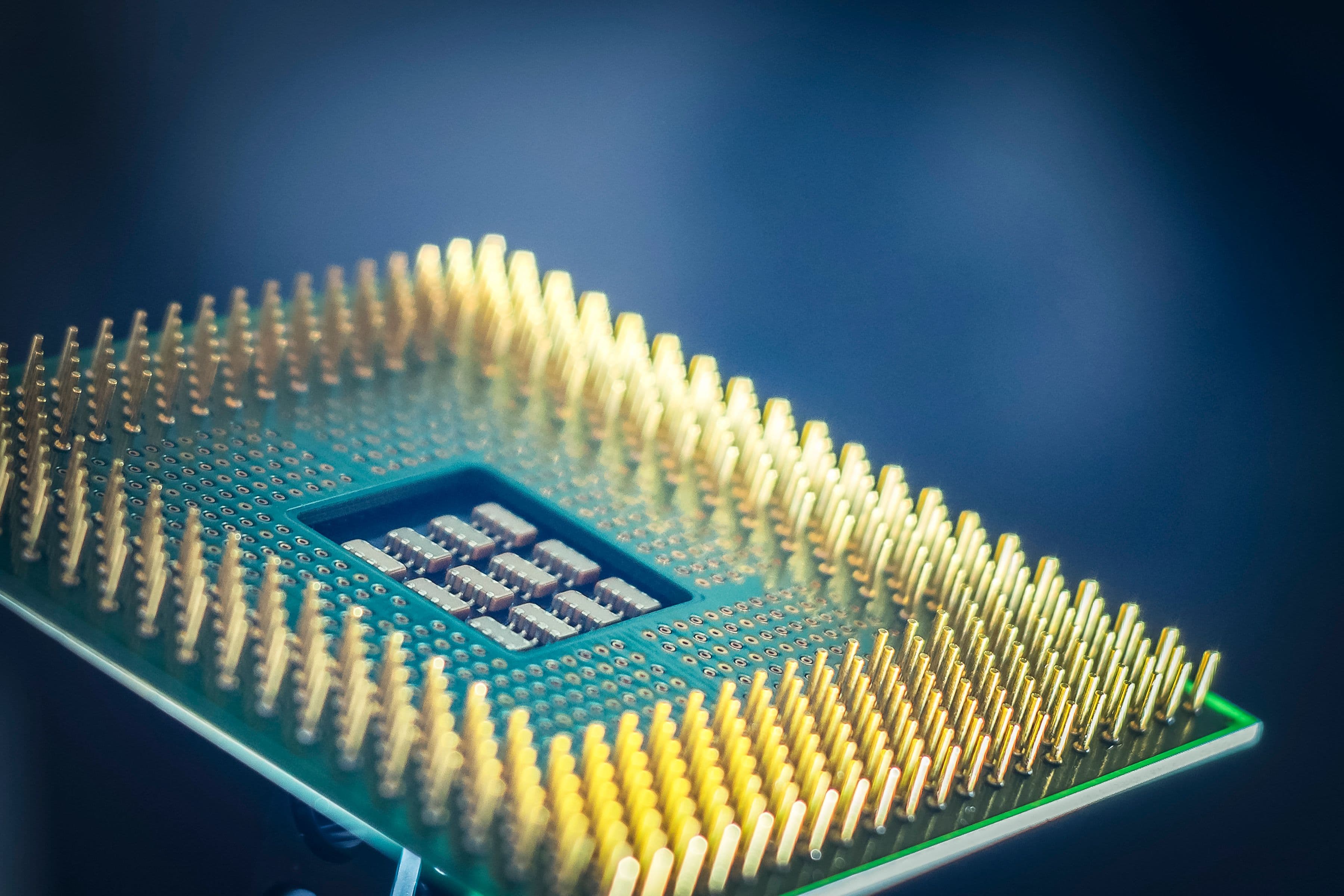
Japan's Sumitomo Bakelite Expands China Chip Packaging Output to Meet AI Hardware Demand
Sumitomo Bakelite is scaling up production of chip packaging materials at its China facilities specifically to meet surging demand driven by AI accelerator manufacturing. Chip packaging — including substrates, encapsulants, and underfill materials — is a critical and often overlooked bottleneck in AI hardware supply chains, as advanced packaging techniques like CoWoS and SoIC are required for chips like NVIDIA's H100 and B100 series. This expansion signals that materials suppliers are now investing ahead of demand curves, reflecting confidence that AI hardware build-out will sustain high volumes for multiple years. For developers and infrastructure engineers tracking AI compute availability and cost, materials supply constraints have historically been an underappreciated factor in GPU pricing and lead times. The move also highlights how AI hardware demand is reshaping global manufacturing investment well beyond chip fabs themselves.
Tech - South China Morning Post

Lava Discovers Thousands of Exposed GPU Servers and High-Severity NVIDIA Monitoring Flaw
Security researchers at Lava have uncovered thousands of GPU servers exposed to the public internet without proper access controls, alongside a high-severity vulnerability in NVIDIA's DCGM Exporter, a widely used GPU monitoring tool. The DCGM Exporter flaw could allow unauthorized actors to access sensitive GPU telemetry data or interfere with monitoring infrastructure in AI training and inference environments. The scale of exposed GPU servers suggests that many organizations deploying AI compute infrastructure are not applying standard network hardening practices. For developers and MLOps teams managing GPU clusters — whether on-premises or in the cloud — this research is a direct call to audit network exposure and patch DCGM Exporter installations. The findings highlight that AI infrastructure security is lagging behind the rapid pace of GPU deployment.
NVIDIA
NVIDIA PivotOPD Trains Multi-Turn AI Agents to Recover From Critical Mistakes
NVIDIA has published research on PivotOPD, a training methodology that teaches multi-turn AI agents to recognize and recover from pivotal errors during long-horizon task execution. The approach identifies specific decision points — termed pivotal mistakes — where an agent's trajectory goes wrong, and applies targeted reinforcement learning to improve recovery behavior at those moments. For developers building agentic systems that must handle complex, multi-step tasks reliably, this research directly addresses one of the hardest practical problems: agents that fail silently or compound early mistakes rather than correcting course. PivotOPD's technique could be applied to coding agents, workflow automation, and any domain where multi-turn reliability is critical. The research represents a meaningful step toward agents that are robust enough for production deployment in high-stakes environments.
NVIDIA
NVIDIA Fine-Tunes Nemotron to Gold-Level Results on IOI and IMO Math Competitions
NVIDIA's Hugging Face blog details how fine-tuning the Nemotron model family achieved gold-level performance on both the International Olympiad in Informatics (IOI) and the International Mathematical Olympiad (IMO), representing two distinct and demanding reasoning domains from a single model family. This demonstrates that targeted fine-tuning of a base model can reach competition-winning performance without requiring separate specialized architectures. For developers working on reasoning-intensive applications — particularly in mathematics, formal verification, or competitive programming — this provides a concrete template and reproducible methodology. The results strengthen the case for Nemotron as a serious reasoning model option within NVIDIA's AI ecosystem. The full fine-tuning methodology is detailed on Hugging Face, making it accessible for practitioners to adapt.
NVIDIA
NVIDIA and Microsoft Launch RTX Spark and Expanded AI Agent Support for Windows PCs
NVIDIA and Microsoft jointly announced RTX Spark, a new local AI compute initiative, alongside expanded AI agent capabilities for Windows at a dedicated hardware event. The Surface RTX Spark Dev Box, targeted at developers needing local AI inference, is now available for preorder at $5,999. Microsoft is simultaneously giving Copilot deeper system-level control over Windows, including file management and search, representing a meaningful step toward always-on agentic OS integration. For developers, RTX Spark provides a dedicated local inference platform that reduces reliance on cloud APIs for latency-sensitive or privacy-sensitive workloads. This signals a broader industry push to make the PC a first-class AI development and deployment target.
NVIDIA
Building a Streaming Robotics Learning Pipeline With NVIDIA Cosmos3-DROID
NVIDIA's Cosmos3-DROID is being used to construct streaming robotics learning pipelines, enabling continuous data ingestion and model updating for robotic systems in near-real-time. The tutorial-style coverage walks through how to architect a pipeline that feeds robot sensory and action data into Cosmos3-DROID's world model framework for ongoing skill acquisition. For developers working on embodied AI or robotics applications, this approach significantly reduces the latency between real-world experience collection and model improvement compared to batch training workflows. NVIDIA's Cosmos platform is positioning itself as infrastructure for physical AI, and Cosmos3-DROID specifically targets robot learning at scale. Teams exploring sim-to-real transfer or continuous robot learning pipelines should evaluate how Cosmos3-DROID's streaming capabilities fit their data infrastructure.
NVIDIA
NVIDIA's IsaacTeleop Brings Graph-Based Retargeting to Robot Teleoperation
NVIDIA has detailed IsaacTeleop, a teleoperation system within the Isaac robotics platform that translates hand and controller tracking data into robot actions using a graph-based retargeting engine. The graph-based approach allows flexible mapping between human hand configurations and diverse robot end-effector morphologies, making it easier to collect high-quality demonstration data across different robot hardware without rewriting motion mapping logic. This is directly relevant to developers and researchers building data pipelines for imitation learning and reinforcement learning from human demonstrations, since high-fidelity teleoperation data is a key bottleneck in physical AI training. IsaacTeleop integrates with the broader Isaac Sim and Isaac Lab ecosystem, meaning teams already using NVIDIA's simulation stack can adopt it incrementally. As embodied AI and humanoid robotics attract more investment, tooling that standardizes the human-to-robot interface layer will be increasingly foundational.
NVIDIA
US Arrests Tech CEO Accused of Smuggling $300M in Nvidia Chips into China
US authorities have arrested a technology company CEO on charges of smuggling approximately $300 million worth of Nvidia chips into China in violation of US export controls. The case represents one of the largest alleged chip export violations on record and underscores the high-stakes enforcement environment surrounding advanced AI compute hardware. For the AI industry, this signals that US export control enforcement is intensifying and that the regulatory perimeter around frontier AI hardware is being actively policed, not just legislated. Companies involved in hardware procurement, distribution, or resale — particularly with any international exposure — face heightened compliance risk. The arrest also reflects the geopolitical premium placed on Nvidia's advanced GPU architectures as a strategic AI resource.
NVIDIA
NVIDIA DGX Spark 64GB Expands Local AI Development Options for Developers
NVIDIA has announced a 64GB memory configuration of the DGX Spark, its compact workstation designed for running large AI models locally, giving developers more headroom for loading and fine-tuning larger models without cloud dependency. The expanded memory tier directly addresses a key bottleneck for engineers working with frontier-scale models locally, enabling workloads that previously required datacenter-class hardware or cloud APIs. For teams prioritizing data privacy, low-latency inference, or offline development workflows, the DGX Spark 64GB meaningfully changes the local AI compute landscape. NVIDIA is also emphasizing synchronization features that help developers scale from local prototyping to cloud or datacenter deployment. This is a concrete hardware option for organizations wanting to reduce cloud inference costs while maintaining serious model capability.
NVIDIA
NVIDIA AI Factories: Productive, Durable, and Fungible Infrastructure for Maximum ROI
NVIDIA has published a detailed framework outlining how its AI Factory architecture is designed around three principles — productivity, durability, and fungibility — to maximize return on compute investment for enterprise and cloud operators. Fungibility is the most technically novel aspect: the argument that NVIDIA GPU clusters can be redeployed across training, inference, and simulation workloads without hardware reconfiguration, reducing idle capacity and improving utilization economics. This framing is aimed directly at CFOs and infrastructure architects evaluating large-scale AI compute purchases, but the technical implications matter for MLOps teams designing cluster allocation strategies. Developers managing multi-tenant GPU infrastructure should understand the fungibility argument as it increasingly shapes how cloud providers price and allocate GPU time. The piece also signals NVIDIA's strategic positioning of its full-stack AI Factory offering against competing architectures from custom silicon vendors.
NVIDIA
NVIDIA Releases Kumo Tabular: Open Tabular Foundation Models That Predict New Rows in a Single Forward Pass
NVIDIA has released Kumo Tabular, a family of open tabular foundation models designed to perform row-level predictions on structured datasets without requiring task-specific fine-tuning. The models operate in a single forward pass, making them immediately applicable to enterprise data tasks like churn prediction, fraud detection, and demand forecasting without the overhead of training custom models from scratch. This is a meaningful step for ML engineers who have historically needed to maintain separate gradient-boosted or neural pipelines for each tabular use case. Kumo Tabular's open release means it can be evaluated and integrated directly into data engineering workflows alongside existing feature stores and ETL pipelines. Developers working on enterprise data products should benchmark it against XGBoost and AutoML baselines on their own datasets.
NVIDIA
NVIDIA and CoreWeave Partner to Close the Loop Between AI Training and Agentic Production
NVIDIA and CoreWeave have announced a deepened partnership aimed at providing a unified infrastructure path from model training through to production deployment of agentic AI workloads, centered on NVIDIA's Vera Rubin architecture. The collaboration is designed to eliminate the friction developers currently experience when moving from training environments to production-grade agentic systems, which often require different infrastructure stacks. CoreWeave's cloud platform will offer tightly integrated NVIDIA hardware and software, enabling developers to use the same stack across the full model lifecycle. For teams building autonomous agents at scale, this reduces the operational complexity of managing heterogeneous compute environments. The partnership signals that agentic AI is now a first-class deployment target for major cloud and hardware vendors, not just a research curiosity.
NVIDIA

DeepSeek Open-Sources Tools to Run AI on Huawei Chips, Reducing NVIDIA Dependency
China's DeepSeek has open-sourced a set of tools and optimizations specifically designed to enable high-performance AI inference and training on Huawei's Ascend chips, directly targeting NVIDIA's dominance in AI compute hardware. The release is strategically significant as it lowers the technical barrier for Chinese AI developers and organizations under export-control pressure to migrate workloads away from NVIDIA GPUs. For developers building on open-source models, this contributes to a growing ecosystem of non-NVIDIA inference tooling, with DeepSeek serving as both a model producer and an infrastructure contributor. The move also accelerates the bifurcation of the global AI hardware stack, with Western and Chinese ecosystems increasingly diverging at the chip and tooling layer. Engineers evaluating multi-cloud or multi-hardware deployment strategies should monitor whether these tools gain adoption beyond China's domestic market.
South China Morning Post
NVIDIA Kumo Tabular Sets New Accuracy-Efficiency Frontier for Tabular Prediction on Hugging Face
NVIDIA has released Kumo Tabular, a model published on Hugging Face that establishes a new accuracy-efficiency trade-off for tabular data prediction tasks, a domain historically dominated by gradient boosting methods like XGBoost and LightGBM. Kumo Tabular is designed to outperform classical baselines on structured data while remaining computationally practical for production deployment. For developers working on recommendation systems, risk modeling, fraud detection, or any ML pipeline that ingests relational or tabular data, Kumo Tabular provides a neural alternative with strong benchmark results. The Hugging Face publication makes the model directly accessible for evaluation and fine-tuning. This is a significant challenge to the conventional wisdom that deep learning struggles to beat tree-based methods on tabular data.
NVIDIA

AMD Acquires World Labs, Fei-Fei Li's World Models Startup, to Challenge NVIDIA
AMD has acquired World Labs, the AI startup founded by Fei-Fei Li focused on large world models and spatial intelligence, in a move explicitly framed as escalating competition against NVIDIA in the AI hardware and systems market. World Labs was building models capable of understanding and generating 3D spatial representations of the world, a capability with significant implications for robotics, simulation, and physical AI applications. For AMD, the acquisition brings both cutting-edge model research talent and a differentiated AI research agenda to pair with its GPU hardware roadmap. Developers building on AMD platforms or targeting physical AI and simulation use cases should watch how World Labs technology gets integrated into AMD's ecosystem. This acquisition signals AMD's intent to compete not just on chips but on the full AI systems stack.
Ars Technica
NVIDIA Launches Open Agent Safety Platform to Contain Rogue Agents in Milliseconds
NVIDIA has unveiled an open agent safety platform consisting of two components: OpenShell, which sandboxes AI agents running on Vera CPUs, and Sentry, which runs on BlueField-4 SmartNICs and can quarantine misbehaving agents within milliseconds at the network layer. The platform is designed to address the growing risk of agent misalignment in production deployments, where an agent that deviates from intended behavior could cause cascading harm before a human operator can intervene. By operating at the hardware and network layers rather than purely in software, the system aims to provide containment guarantees that application-layer safeguards cannot reliably offer. For developers shipping agentic systems into enterprise or critical infrastructure, this represents a meaningful new layer of defense-in-depth. The open nature of the platform suggests NVIDIA intends it to become a baseline standard, which could drive adoption across cloud providers and on-premises deployments.
NVIDIA

NVIDIA Warp and MjWarp Tutorial: Accelerating Robotics Simulation and Learning
Hugging Face has published a detailed technical guide on using NVIDIA Warp and MjWarp to accelerate robotics simulation and reinforcement learning workflows. NVIDIA Warp is a Python framework for GPU-accelerated simulation, and MjWarp brings MuJoCo physics into the Warp ecosystem — enabling faster-than-real-time parallel simulation critical for training robotic policies. The tutorial walks through setup, integration, and practical workflow patterns relevant to anyone building embodied AI systems or sim-to-real transfer pipelines. This is highly relevant for developers working on robotics, physical AI, or any reinforcement learning application requiring high-throughput environment simulation. The Hugging Face collaboration with NVIDIA here highlights the growing overlap between the open-source ML ecosystem and high-performance robotics infrastructure.
Hugging Face
NVIDIA Isaac ROS 5.0 Brings Agentic Capabilities to Open-Source Robotics
NVIDIA has released Isaac ROS 5.0, a major update to its open-source robotics operating system that introduces agentic development capabilities, enabling robots to reason and act more autonomously within the ROS ecosystem. The update positions Isaac ROS as a direct bridge between the AI agent software stack and physical robotic hardware, a gap that has historically slowed production robotics deployments. Developers working in robotics or embodied AI will find new primitives for integrating perception, planning, and execution into cohesive agentic loops. The open-source nature of the release lowers the barrier for startups and researchers to build on NVIDIA's robotics stack without full dependency on proprietary tooling. Isaac ROS 5.0 is likely to become a reference architecture for physical AI development as the robotics and LLM ecosystems continue to converge.
NVIDIA
AI Security Is an Engineering Problem: NVIDIA Outlines Defense Strategies Across the Agent Stack
NVIDIA has published a technical perspective arguing that AI security should be treated as a structured engineering discipline rather than an afterthought, with specific defense strategies mapped to each layer of a modern AI agent stack. The piece covers threat surfaces including prompt injection, model extraction, data poisoning, and output manipulation, and outlines mitigations developers can apply at the model, orchestration, and infrastructure layers. Given the same-day news of the Muse 0-day and Gemini breach confirmations, this framing lands with particular urgency and practical relevance. For developers shipping agentic systems, the layered defense model provides a checklist-style framework for auditing existing pipelines against known attack classes. This is essential reading for any team that has moved beyond prototype and into production AI agent deployments.
NVIDIA
NVIDIA Details Safety Architecture for Physical AI Deployment at Scale with HALOS
NVIDIA has published a detailed breakdown of HALOS, its layered safety framework for deploying physical AI systems — including robots and autonomous vehicles — at production scale. HALOS is designed to enforce safety guarantees at every layer of the physical AI stack, from sensor input validation through planning and actuation, addressing the unique failure modes that arise when AI systems interact with the physical world. For developers working on robotics, warehouse automation, or autonomous systems, this represents a concrete reference architecture for building safety-critical AI pipelines that can meet real-world deployment requirements. The framework also signals NVIDIA's broader ambition to own the physical AI infrastructure stack, complementing its software platforms like Isaac and Omniverse. Teams evaluating NVIDIA's robotics ecosystem should understand HALOS as a foundational safety layer they will need to integrate with.
NVIDIA
NVIDIA Introduces SoL-Pi: Auto-Research Loops That Cut Coding Agent Token Traffic by Up to 49%
NVIDIA researchers have released SoL-Pi, a system that implements automatic research loops for coding agents, reducing token traffic by up to 49% without sacrificing output quality. The approach allows coding agents to iteratively refine their internal search and retrieval steps before generating responses, cutting the volume of tokens exchanged between the agent, tools, and the LLM backbone. A nearly 50% reduction in token overhead for coding agents is a substantial efficiency gain, directly translating to lower API costs and faster end-to-end task completion for development automation pipelines. This is particularly relevant for teams using AI coding agents for large-scale code generation, refactoring, or repository-level tasks where multiple tool calls and context lookups are standard. SoL-Pi's auto-research loop pattern may also generalize beyond coding to other retrieval-heavy agentic domains.
NVIDIA
Chinese AI Chipmaker Hygon Plots Expansion from Data Centers into Robotics
Chinese AI chipmaker Hygon has announced plans to expand beyond its current data center focus and move into the robotics chip market, signaling a strategic diversification as competition in AI inference hardware intensifies. Hygon is one of China's primary domestic alternatives to NVIDIA GPUs and has gained ground amid ongoing US export restrictions. The robotics expansion suggests Hygon is positioning for the growing edge AI and physical AI markets, where purpose-built silicon for real-time inference in mobile platforms is increasingly demanded. For developers and infrastructure teams tracking AI hardware supply chains, Hygon's moves are relevant given the geopolitical constraints shaping GPU availability in Asia-Pacific markets. The expansion also reflects the broader convergence of data center and robotics AI workloads that is driving new chip architectures globally.
Tech - South China Morning Post
Microsoft Open-Sources TauGrid: A Kubernetes-Native Stack for GPU AI Workloads
Microsoft has open-sourced TauGrid, a Kubernetes-native infrastructure stack purpose-built for orchestrating GPU-intensive AI workloads. TauGrid is designed to handle the scheduling, resource management, and networking complexity that arises when running large-scale model training or inference on GPU clusters within Kubernetes environments. For MLOps and platform engineers, this provides a ready-made foundation that integrates with existing cloud-native tooling rather than requiring proprietary orchestration layers. The open-source release means teams can inspect, extend, and self-host the stack without vendor lock-in. This is a practical addition to the ecosystem for organizations running their own AI infrastructure or building internal ML platforms.
Microsoft
NVIDIA Vera Rubin NVL72 Sets New Records in MLPerf Inference v6.1 Debut
NVIDIA's Vera Rubin NVL72 system made its MLPerf Inference v6.1 debut and delivered leading performance across key AI inference benchmarks. The NVL72 configuration combines Vera CPUs with Rubin GPUs in a rack-scale design optimized for large model throughput. This is the first public benchmark validation of the Rubin architecture, giving developers and infrastructure teams concrete performance data to inform procurement and deployment decisions. For teams building or scaling inference infrastructure, the MLPerf results provide a direct comparison point against prior Hopper- and Blackwell-based systems. The results signal that NVIDIA's next-generation stack is production-ready and competitive at scale.
NVIDIA
Inside NVIDIA's cuDNN Graph API: Fusion, Autotuning, and Plan Reuse with cuDNN Frontend
A MarkTechPost technical deep-dive covers NVIDIA's cuDNN Graph API, explaining how it enables operation fusion, autotuning, and execution plan reuse via the cuDNN Frontend library. These features allow developers to significantly reduce kernel launch overhead and memory bandwidth consumption in deep learning workloads by composing multiple operations into optimized fused graphs rather than executing them sequentially. The autotuning capability selects the best execution plan for a given hardware configuration and input shape, while plan reuse avoids redundant compilation costs across inference calls. For engineers writing custom CUDA or optimizing inference pipelines, the cuDNN Graph API represents a meaningful productivity and performance tool that sits below the level of frameworks like PyTorch but above raw CUDA. Teams building high-throughput inference systems or custom training loops should evaluate this API as a path to lower-latency, higher-efficiency execution.
NVIDIA
NVIDIA DSX AI Factory Platform Reports Early Production Results
NVIDIA has published early production results for its DSX AI Factory platform, offering concrete performance and efficiency data from real-world deployments rather than synthetic benchmarks. The results cover end-to-end AI factory workloads including training and inference pipelines, with NVIDIA reporting gains in throughput and energy efficiency versus prior-generation configurations. For infrastructure teams evaluating AI factory builds, this data provides an early empirical baseline for capacity planning and ROI modeling around DSX deployments. The release comes alongside NVIDIA's broader messaging at the AI Infra Summit about shifting the industry's primary metric toward tokens-per-watt. Engineers and architects planning large-scale inference deployments should review these numbers as a reference point for next-generation system design.
NVIDIA
NVIDIA Unveils Vera Rubin and DSX Platform at AI Infra Summit, Targets Tokens-Per-Watt Efficiency
At the AI Infra Summit, NVIDIA presented advances in its Vera Rubin GPU architecture and DSX AI Factory platform, framing the next generation of AI infrastructure around a tokens-per-watt efficiency metric rather than raw compute throughput alone. Early production results for the DSX platform show meaningful gains in energy efficiency across full-stack AI factory deployments, spanning networking, storage, and compute. This shift in framing is significant for developers and platform engineers who face escalating energy costs as inference workloads scale — optimizing for tokens-per-watt directly impacts operating economics. The Vera Rubin architecture is positioned as the backbone for the next wave of large-scale AI factories, with NVIDIA emphasizing end-to-end system integration over isolated chip performance. Teams planning infrastructure refreshes or AI factory deployments should factor in these efficiency benchmarks when evaluating next-generation hardware.
NVIDIA
NVIDIA Launches RTX PRO 5500 Blackwell GPU With 84 GB GDDR7 Memory
NVIDIA has announced the RTX PRO 5500, a new Blackwell-architecture GPU featuring 84 GB of GDDR7 memory, targeting professional workstation and AI inference workloads. The large memory footprint makes it particularly suitable for running large language models locally, fine-tuning mid-sized models, and handling high-resolution multimodal inference without offloading to the cloud. For developers who need on-premise AI compute — whether for privacy, latency, or cost reasons — this card represents a significant step up in accessible local AI horsepower. The Blackwell architecture also brings improved FP4 and FP8 tensor core performance, which directly benefits quantized LLM inference throughput. Teams evaluating on-device or on-premise AI infrastructure should place this card in their benchmark pipeline.
NVIDIA
Perplexity Portable Computer Now Available on Windows, Powered by NVIDIA RTX for Local AI
Perplexity's AI assistant, previously limited to its own hardware, is now available on Windows PCs powered by NVIDIA RTX GPUs, enabling fully local AI inference without cloud dependency. The integration leverages NVIDIA's TensorRT-LLM and RTX acceleration to deliver fast on-device responses, positioning Perplexity as a privacy-respecting alternative to cloud-based assistants. This is a notable move for developers who want to build or demo AI-powered applications in air-gapped or latency-sensitive environments. It also signals a broader trend of AI assistants migrating to the edge, with NVIDIA's RTX ecosystem becoming a key deployment platform. Developers with RTX hardware can access this capability now through the Windows app.
NVIDIA
NVIDIA Open-Sources OSMO: Single YAML File Orchestrates Physical AI Training, Simulation, and Robot Testing
NVIDIA has open-sourced OSMO, an orchestration framework that lets developers describe and manage the full physical AI pipeline — training, simulation, and robot testing — using a single YAML configuration file. This dramatically simplifies the workflow for teams building embodied AI systems, replacing fragmented tooling with a unified declarative interface. OSMO is designed to integrate with NVIDIA's Isaac and Omniverse ecosystems, making it immediately usable for robotics developers already in that stack. For engineers working on physical AI, this reduces the glue code required to stitch together training and sim-to-real pipelines. It's a significant open-source contribution that lowers the barrier to production-grade robotics AI development.
NVIDIA
Beijing Pushes AI-Assisted Chip Design as Part of Semiconductor Self-Sufficiency Drive
Chinese government and research institutions are accelerating the use of AI tools to automate and optimize chip design workflows, framing it as a critical component of China's broader semiconductor self-sufficiency strategy amid ongoing export restrictions on advanced chips and EDA tooling. AI-assisted design automation is being targeted specifically to reduce dependence on Western EDA software and to compress the time-to-silicon for domestically designed chips. For developers and engineers tracking the geopolitical dimensions of AI infrastructure, this signals that AI is now being actively weaponized in the hardware supply chain race — not just as a product but as a design tool. Chinese advances in AI-driven EDA could eventually produce competitive chips at lower cost, which would have downstream implications for global GPU and accelerator markets. Teams planning long-term infrastructure procurement should factor the potential disruption of China's AI-chip ecosystem into their roadmaps.
Tech - South China Morning Post
d-Matrix Connects Raptor XPUs to NVIDIA AI Factories via NVLink Fusion
d-Matrix has announced adoption of NVIDIA NVLink Fusion to integrate its Raptor XPU hardware with NVIDIA AI factory infrastructure at rack scale. NVLink Fusion allows non-NVIDIA silicon to participate in NVIDIA's high-bandwidth interconnect fabric, enabling heterogeneous compute architectures in large-scale AI deployments. This is a meaningful architectural development for enterprises seeking to mix specialized inference accelerators with NVIDIA's training and serving ecosystem without sacrificing interconnect performance. For infrastructure engineers, it signals that NVIDIA's ecosystem is becoming an open interconnect standard rather than a closed GPU-only stack. The move positions d-Matrix's inference-optimized XPUs as complementary to — rather than competing with — NVIDIA GPUs in AI factory deployments.
NVIDIA
Skild AI Teaches Robots New Tasks from a Single Video Using NVIDIA Physical AI
Skild AI has released its S1 robot foundation model, built in collaboration with NVIDIA and leveraging NVIDIA's physical AI platform including Isaac and Omniverse technologies. The key capability is one-shot task learning: S1 can generalize to new robotic tasks from a single demonstration video, removing the need for large per-task datasets. This is a significant advance in robot generalization and directly addresses one of the core bottlenecks in deploying robots across diverse real-world environments. NVIDIA's involvement as infrastructure provider underscores how its physical AI stack is becoming the default substrate for next-generation robotics research. Developers working in robotics or embodied AI should evaluate S1 as a foundation model candidate for their manipulation and navigation pipelines.
NVIDIA
NVIDIA Launches PAIR: Free Tool to Link Home Computers Into a Personal AI Inference Cluster
NVIDIA has released PAIR (Personal AI Router), a free tool that allows users to pool multiple computers — including RTX-equipped PCs and MacBooks — into a unified local inference cluster for running large language models. The tool is designed to democratize local AI compute by letting developers and researchers combine idle machines into a single addressable endpoint, effectively creating a personal data center without cloud costs. PAIR debuted at IFA 2026 alongside broader announcements about NVIDIA's local AI ambitions, including new RTX Spark hardware optimized for on-device inference. For developers who need to run models like Qwen or Llama locally at scale without GPU server costs, PAIR offers a practical path to multi-node inference at home or in a small office. This is particularly relevant for privacy-sensitive workloads or teams that want to avoid API rate limits and latency from cloud providers.
NVIDIA
NVIDIA to Acquire Hugging Face for Nearly $13 Billion
NVIDIA has announced it will acquire Hugging Face, the leading open-source AI model hub and community platform, in a deal valued at approximately $13 billion. The acquisition brings together NVIDIA's dominant hardware and software stack with Hugging Face's massive library of models, datasets, and the widely-used Transformers and Diffusers libraries. For the open-source AI community, this raises immediate questions about the future governance of the Hub, licensing of models, and whether NVIDIA will prioritize its own hardware in training and inference tooling. Developers who depend on Hugging Face infrastructure — from model hosting to the Inference API — should monitor integration announcements closely, as platform priorities may shift toward NVIDIA-optimized pipelines. This is one of the largest acquisitions in AI history and is likely to accelerate consolidation across the model development ecosystem.
NVIDIA
NVIDIA and CrowdStrike Strengthen Agentic Cybersecurity at Fal.Con 2026
NVIDIA and CrowdStrike announced a deepened partnership at the Fal.Con 2026 conference focused on expanding agentic AI capabilities in cybersecurity, with NVIDIA's AI infrastructure powering CrowdStrike's autonomous threat detection and response workflows. The collaboration targets the frontier of agentic security — systems that can autonomously investigate alerts, correlate signals across data sources, and initiate remediation without waiting for human review. For developers building security tooling or integrating AI into SOC (security operations center) workflows, this partnership signals that GPU-accelerated agentic inference is becoming a core infrastructure requirement for real-time threat response at scale. NVIDIA's role here is as an infrastructure enabler, while CrowdStrike provides the domain-specific model training and deployment context. Developers should monitor whether NVIDIA's NIM microservices or specific GPU configurations are being standardized as part of this agentic security stack.
NVIDIA
NVIDIA and MediaTek Expand Partnership for AI Edge-to-Cloud Platforms
NVIDIA and MediaTek have announced an expanded partnership aimed at building integrated AI platforms that span edge devices and cloud infrastructure, combining NVIDIA's AI software and GPU expertise with MediaTek's chip design capabilities for mobile and edge hardware. The collaboration targets use cases where AI inference needs to run efficiently across both on-device and cloud environments, a critical architecture pattern for mobile AI, automotive, and IoT applications. For developers building AI applications that must operate under power and latency constraints on edge hardware, this partnership could accelerate access to optimized inference stacks that bridge the NVIDIA ecosystem with MediaTek-powered devices. The alliance also signals NVIDIA's intent to extend its AI platform dominance beyond data centers into the silicon that powers consumer and embedded devices. Engineers working on edge AI deployments should watch for joint SDKs or reference platforms emerging from this partnership.
NVIDIA
AMD Instinct MI430X GPUs Power €387.8M LUMI-AI Supercomputer
The LUMI-AI supercomputer, a major European AI computing initiative, has been confirmed to use AMD Instinct MI430X GPUs alongside AMD EPYC CPUs, with a total investment of €387.8 million. This represents one of the largest public AI supercomputer deployments in Europe and signals that AMD's Instinct line is increasingly competitive in high-performance AI infrastructure at national scale. For developers working on large model training or research requiring HPC-class compute, LUMI-AI's availability through European research access programs could offer an alternative to commercial cloud GPU providers. The deployment also validates AMD's ROCm software stack for frontier AI workloads, which is relevant for teams evaluating multi-vendor GPU strategies. Engineers should monitor AMD's MI430X performance benchmarks on transformer workloads as the system comes online.
Unite.AI