benchmark
50 briefs tagged benchmark, most recent first
Today's briefs

FairStress: Allen AI Proposes a Deeper Evaluation Framework for LLM Decision-Making Fairness
Allen Institute for AI has published FairStress, a new evaluation methodology designed to stress-test LLMs for fairness failures in high-stakes decision-making scenarios that standard benchmarks miss. The framework goes beyond demographic parity checks by constructing adversarial decision contexts where fairness violations are more likely to surface — including edge cases involving intersectional identities, ambiguous instructions, and contextual pressure. FairStress is released alongside a leaderboard and evaluation suite on Hugging Face, making it immediately usable for developers who want to audit their models before deployment in consequential applications. For teams building AI systems in hiring, lending, healthcare triage, or legal contexts, FairStress offers a more rigorous pre-deployment signal than existing fairness benchmarks. The methodology is model-agnostic and can be applied to any instruction-following LLM, including fine-tuned versions of open-source base models.
Hugging Face

OpenAI Advances Coding Support for Low-Resource Programming Languages
OpenAI has published work on improving its models' coding capabilities specifically for low-resource programming languages — languages with limited training data representation compared to Python, JavaScript, or C++. The research addresses a meaningful gap: developers working in languages like Fortran, COBOL, Erlang, or domain-specific languages often find AI coding assistants significantly less useful than those working in mainstream languages. OpenAI's approach focuses on data augmentation, transfer learning, and model fine-tuning strategies that improve performance without requiring massive language-specific corpora. For developers in industries like finance, scientific computing, or telecommunications where legacy or niche languages remain critical, this represents a direct improvement to AI-assisted development workflows. It also signals that OpenAI is working to make its coding models useful across a broader slice of the global software ecosystem.
OpenAI Blog

MIT Researchers Give AI Crystal-Clear Vision of the Materials World
MIT researchers have developed a new AI approach that significantly improves how machine learning models interpret and predict the properties of crystalline materials, addressing longstanding challenges in representing complex atomic structures. The system provides AI models with richer, more geometrically precise representations of material crystal structures, enabling more accurate predictions of physical and chemical properties relevant to semiconductors, batteries, and catalysts. This has direct implications for AI-accelerated materials discovery pipelines, which are increasingly being used by industrial and academic labs to shortcut expensive physical experimentation. For developers working in scientific ML or building simulation tools, the approach represents a methodological advance in how domain-specific structural data can be encoded for neural networks. The research extends the utility of foundation models into highly structured, physics-constrained prediction tasks.
Mit.edu

Mistral Releases Timestral: A 209M-Parameter Time-Series Forecasting Model Family
Mistral AI has launched Timestral, a family of time-series foundation models starting at 209 million parameters, designed for zero-shot and few-shot forecasting across diverse temporal datasets. Mistral claims Timestral outperforms Google's TimesFM-3 on standard forecasting benchmarks, positioning it as the new open-weight leader in time-series prediction at a highly compact parameter count. The model family is designed for practical deployment in resource-constrained environments, making it viable for edge inference or cost-sensitive production pipelines. Developers working in finance, supply chain, energy, or any domain requiring temporal predictions can integrate Timestral without the overhead of training custom forecasting models. This release extends Mistral's portfolio well beyond language tasks and signals a broader push into domain-specific foundation models.
Mistral AI

DeepSeek Releases V4.1-Flash-1017 with 77.0 DeepSWE Score and Opens Search API
DeepSeek has shipped V4.1-Flash-1017, a new flash-tier model iteration scoring 77.0 on the DeepSWE benchmark, a coding and software-engineering evaluation that directly measures real-world developer utility. Alongside the model, DeepSeek is opening its Search API, giving developers programmatic access to web-grounded retrieval integrated with model inference. The DeepSWE score of 77.0 places it competitively among frontier coding models and signals DeepSeek's continued aggressive iteration cadence. For developers building coding assistants, agentic pipelines, or retrieval-augmented applications, the newly available Search API is an immediately actionable integration point. This release continues the pattern of DeepSeek shipping high-capability, cost-efficient models that challenge Western lab offerings on performance-per-cost metrics.
MarkTechPost

Liquid AI Releases d1-ultra: A Multimodal Decision Model Scoring 65 on the AA Decision Index
Liquid AI has launched d1-ultra, a multimodal model specifically architected for decision-making tasks, scoring 65 on the AA Decision Index benchmark. Unlike general-purpose language models, d1-ultra is designed around structured decision outputs across text, image, and other modalities, positioning it for enterprise automation, robotic process orchestration, and agentic decision pipelines. Liquid AI has been building on non-transformer architectures rooted in liquid neural networks, and d1-ultra represents their most capable and broadly deployable model to date. For developers building agents that need to make reliable, auditable decisions across multiple data types, this is a specialized alternative to prompting general-purpose LLMs. The AA Decision Index score provides a concrete benchmark for comparison, though independent third-party validation will be important to assess real-world applicability.
MarkTechPost
Anthropic: Claude Beat Best Published Quantum Circuit Designs
Anthropic claims Claude has surpassed the best published quantum circuit designs, marking a concrete instance of AI exceeding human expert performance in a specialized and technically demanding domain. Quantum circuit optimization is a hard combinatorial problem where even marginal improvements can have outsized effects on near-term quantum hardware fidelity and gate efficiency. This result signals that large language models with strong reasoning capabilities are beginning to contribute meaningfully to quantum computing research, not just software engineering tasks. For developers and researchers working at the intersection of AI and quantum computing, this opens the door to using Claude as a co-researcher or circuit design assistant. The finding also raises the bar for what we should expect from frontier AI models in terms of novel scientific contribution.
Anthropic

CopilotKit Releases CLiF: Continual Learning Platform for Agent Traces and Fine-Tuning
CopilotKit has launched CLiF, a continual learning platform that automatically converts agent execution traces and user interactions into structured skills, evaluation datasets, and fine-tuning data. The platform addresses one of the key operational challenges in production agentic systems: capturing and learning from real-world agent behavior without manual data labeling pipelines. For developers running AI agents in production, CLiF creates a flywheel where agent usage directly improves future model performance through automated data extraction and structuring. The tool integrates with existing CopilotKit agent infrastructure, lowering the barrier to entry for teams already using the framework. This is a notable step toward self-improving agentic systems grounded in actual user interaction data rather than synthetic benchmarks.
CopilotKit

Grok Voice 3.0 Ranks #1 on Artificial Analysis Voice Agent Leaderboard
xAI has released Grok Voice 3.0, a voice agent model that has taken the top position on the Artificial Analysis voice model leaderboard. The model is purpose-built for voice-based agentic interactions, positioning xAI as a serious competitor in the rapidly growing voice AI segment alongside OpenAI and ElevenLabs. For developers building voice-first applications, Grok Voice 3.0 represents a new top-tier option with benchmark-validated quality metrics. The leaderboard ranking provides an objective reference point for teams evaluating voice models for production deployment. Access details and API availability through xAI's platform will determine how quickly developers can integrate it into their workflows.
xAI
TII Releases Falcon-ASR: 1.6B Arabic Speech Recognition Model Achieves 20.92% WER
The Technology Innovation Institute has open-released Falcon-ASR, a 1.6B parameter automatic speech recognition model purpose-built for Arabic, reporting a word error rate of 20.92% on standard benchmarks. Arabic ASR has historically lagged behind English and other high-resource languages due to dialect diversity and limited training data, making a dedicated 1.6B model from a credible lab a meaningful contribution. The Falcon brand, previously associated with TII's competitive open LLMs, now extends into the speech domain, signaling a broader multimodal research agenda. Developers building Arabic-language voice applications, transcription pipelines, or voice agents will find this a practical drop-in or fine-tuning base. The relatively compact 1.6B size makes it deployable on consumer-grade hardware and edge devices.
MarkTechPost
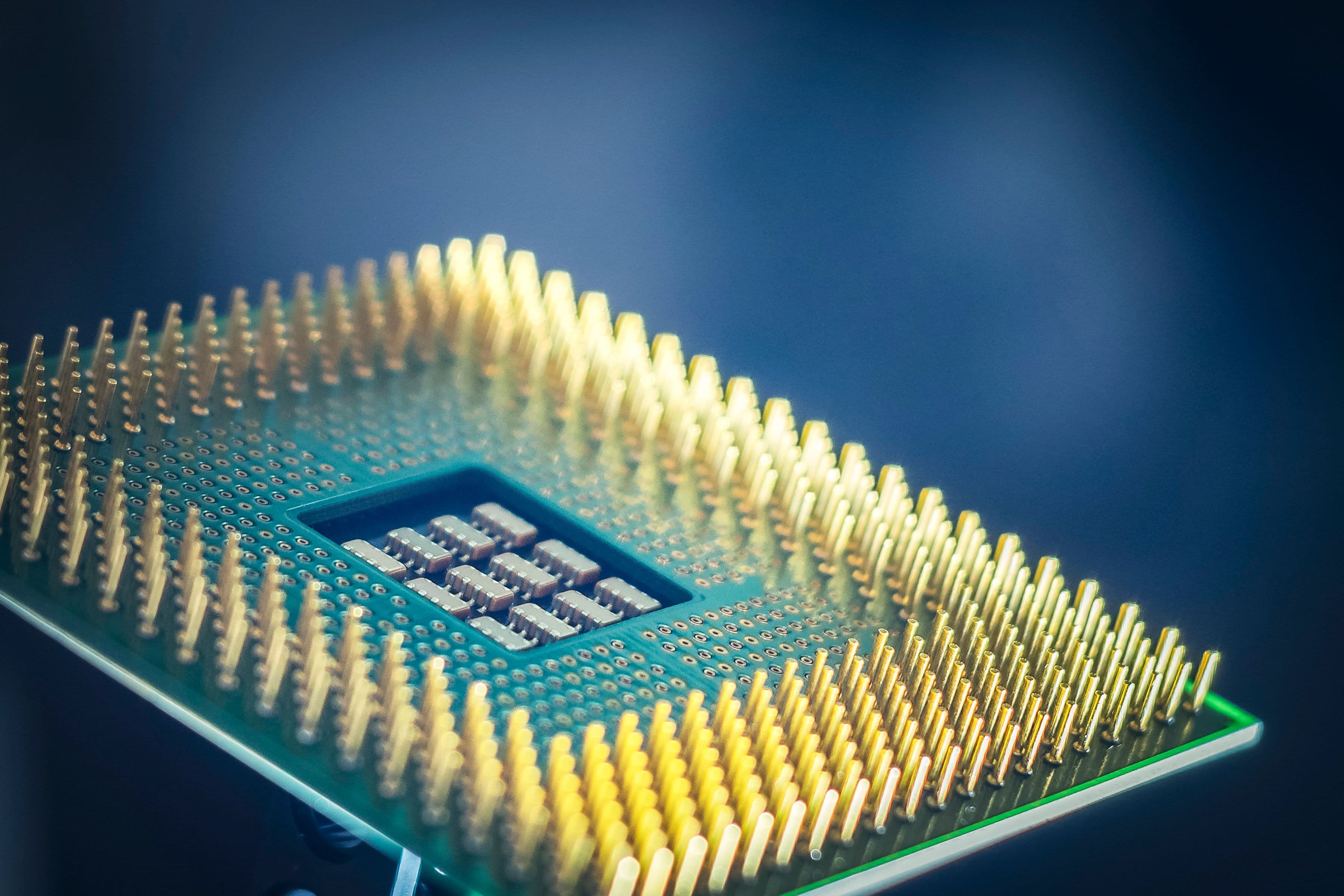
Japan's Sumitomo Bakelite Expands China Chip Packaging Output to Meet AI Hardware Demand
Sumitomo Bakelite is scaling up production of chip packaging materials at its China facilities specifically to meet surging demand driven by AI accelerator manufacturing. Chip packaging — including substrates, encapsulants, and underfill materials — is a critical and often overlooked bottleneck in AI hardware supply chains, as advanced packaging techniques like CoWoS and SoIC are required for chips like NVIDIA's H100 and B100 series. This expansion signals that materials suppliers are now investing ahead of demand curves, reflecting confidence that AI hardware build-out will sustain high volumes for multiple years. For developers and infrastructure engineers tracking AI compute availability and cost, materials supply constraints have historically been an underappreciated factor in GPU pricing and lead times. The move also highlights how AI hardware demand is reshaping global manufacturing investment well beyond chip fabs themselves.
Tech - South China Morning Post

Sakana AI's LLM Peer Review System Catches 73% of Core-Claim Errors
Sakana AI has developed an automated peer review system that uses LLMs to evaluate scientific claims in papers, achieving a 73% detection rate on core-claim errors in its evaluations. The system is designed to mimic the human peer review process by having models critically assess methodology, conclusions, and internal consistency of research outputs. For developers working in AI-assisted research tooling, automated scientific validation, or any domain requiring claim verification, this benchmark provides a concrete signal of where LLM-based review currently stands relative to human reviewers. A 73% catch rate is meaningful but also highlights the remaining gap — roughly one in four core errors goes undetected, which matters enormously in high-stakes scientific contexts. This work is directly relevant to teams building RAG systems, research assistants, or automated fact-checking pipelines who need realistic expectations for LLM verification capabilities.
MarkTechPost
Anthropic Air-Gaps Internal Evaluations from the Internet
Anthropic is physically isolating its internal model evaluation pipelines from internet access, a significant operational security move aimed at preventing external interference with safety assessments. The decision reflects growing concern that evaluation infrastructure itself can become an attack surface — a model or external actor could theoretically influence test results if evaluations are network-accessible. For developers building on Claude or using Anthropic's APIs, this signals that Anthropic is treating its evaluation stack as safety-critical infrastructure deserving the same threat modeling as production systems. This move also sets a precedent that other frontier labs may follow, potentially reshaping how the industry approaches eval integrity. Teams building their own LLM evaluation pipelines should consider what network isolation and access controls are appropriate for their own testing environments.
Anthropic
Secret Dates in System Prompts Undermine Language Model Evaluation
New research reveals that embedding hidden date information in system prompts can significantly skew language model evaluation results, as models may use temporal cues to infer which benchmarks they should perform well on. This is a subtle but serious evaluation integrity issue — if models are sensitive to date signals, benchmark scores may reflect overfitting to evaluation periods rather than genuine capability. For developers and researchers running their own evals, this is a practical warning to audit system prompts for any contextual signals that could leak information about the evaluation context. The finding also has implications for how public leaderboards should be interpreted, particularly for models with known training cutoffs close to benchmark publication dates. Reproducible, signal-clean evaluation design is now a more pressing concern than many teams currently treat it.
Unite.AI
AI Coding Agents Generate More Code But Not More Delivered Software
New research covered by Ars Technica finds that AI coding agents significantly increase raw code output but do not proportionally increase the amount of working, shipped software — pointing to a gap between code generation velocity and actual software delivery. The findings suggest that bottlenecks like code review, integration testing, debugging hallucinated logic, and architectural decision-making remain human-bound even when code writing is accelerated. For engineering teams adopting AI coding tools, this is a calibration signal: productivity gains may be overstated if measured only by lines of code or commit frequency rather than deployed features or bug resolution rates. The research reinforces the importance of measuring AI coding assistant ROI at the workflow level, not the line-of-code level. Developers and engineering managers should use this as a prompt to audit where their actual delivery bottlenecks sit before investing further in agent-based coding workflows.
Ars Technica
OpenAI's Mathematics Outputs Are Generating Years of Work for Mathematicians
OpenAI has released mathematical solutions or proofs that mathematicians describe as requiring years to fully verify and understand, signaling a qualitative leap in AI-assisted formal reasoning. The outputs are not trivial benchmark results but appear to include novel or complex mathematical content that exceeds what the research community can rapidly validate. This is a landmark moment for AI in scientific discovery — if the results hold up, it demonstrates that frontier models can generate genuinely novel contributions to hard formal domains, not just pattern-match against known solutions. For developers building reasoning-heavy applications in science, engineering, or formal verification, this raises the ceiling for what LLM-backed systems might eventually contribute. The verification bottleneck itself is a new challenge: human review capacity may become the limiting factor rather than model capability.
OpenAI Blog
Saluki 27B: A 2-Bit Quantized Qwen3.8-27B That Outperforms the Base Model at Tool Calling
Saluki 27B is a 2-bit quantized version of Qwen3.8-27B that reportedly beats its full-precision parent on tool-calling benchmarks, a striking result that challenges assumptions about quantization-quality tradeoffs. Aggressive quantization to 2-bit typically degrades model capability significantly, making this an unusual and technically notable outcome worth scrutinizing. For developers deploying LLMs in resource-constrained environments — edge hardware, low-VRAM servers, or cost-sensitive cloud workloads — a 2-bit model that matches or exceeds the original at agentic tasks would be a major practical win. The tool-calling advantage specifically matters because function-calling accuracy is a critical bottleneck in agent reliability. This is worth benchmarking directly in your own tool-use pipelines before drawing conclusions from published numbers.
MarkTechPost

Arena Secures $200M Series B at $3.1B Valuation to Advance AI Evaluation
Arena, the company behind large-scale AI model evaluation infrastructure, has closed a $200 million Series B funding round at a $3.1 billion valuation. The funding will be used to expand Arena's evaluation platforms, which are widely used by researchers and developers to benchmark model capabilities across a range of tasks. AI evaluation has become a critical and contested infrastructure layer as model releases accelerate and capability claims require independent verification. For developers and organizations selecting models for production use, robust third-party evaluation platforms directly affect which models they can trust and how they compare purchasing decisions. Arena's scale of funding signals that the market views evaluation infrastructure as a foundational, long-term category in the AI stack.
Unite.AI

JetBrains Releases Mellum2.1, a 12B MoE Open Model Built for Coding Agents
JetBrains has released Mellum2.1, a 12-billion-parameter Mixture-of-Experts open model specifically architected for coding agent use cases. The model is designed to handle multi-step code generation, refactoring, and tool-use patterns that modern agentic coding workflows demand, with MoE efficiency allowing more capable reasoning at lower inference cost. As an open release, Mellum2.1 is directly available for developers to self-host, fine-tune, or integrate into custom coding pipelines without API dependency. This positions JetBrains as a serious contributor to the open coding model ecosystem alongside offerings from Mistral, DeepSeek, and others. Teams building internal developer tools or coding agents should evaluate Mellum2.1 as a strong open alternative to proprietary coding models.
MarkTechPost
NVIDIA Fine-Tunes Nemotron to Gold-Level Results on IOI and IMO Math Competitions
NVIDIA's Hugging Face blog details how fine-tuning the Nemotron model family achieved gold-level performance on both the International Olympiad in Informatics (IOI) and the International Mathematical Olympiad (IMO), representing two distinct and demanding reasoning domains from a single model family. This demonstrates that targeted fine-tuning of a base model can reach competition-winning performance without requiring separate specialized architectures. For developers working on reasoning-intensive applications — particularly in mathematics, formal verification, or competitive programming — this provides a concrete template and reproducible methodology. The results strengthen the case for Nemotron as a serious reasoning model option within NVIDIA's AI ecosystem. The full fine-tuning methodology is detailed on Hugging Face, making it accessible for practitioners to adapt.
NVIDIA
Perplexity Releases pplx-embed-v2-late: 0.6B Edge and 9B Embedding Models, Scoring 92.4% on MADQA
Perplexity AI has released pplx-embed-v2-late, a new embedding model family comprising a 0.6B edge-optimized variant and a 9B full model, with the latter scoring 92.4% on the MADQA benchmark for multi-answer document question answering. The edge model is designed for deployment in resource-constrained environments where retrieval quality must be preserved without cloud round-trips. For developers building RAG pipelines, semantic search, or document retrieval systems, these models offer a high-quality embedding option with explicit benchmark validation. The MADQA score is particularly relevant for enterprise document retrieval scenarios where multiple correct answers must be identified. This release expands Perplexity's portfolio beyond its consumer search product into the developer infrastructure space.
Perplexity

Mistral Releases 'Le Chonk,' Claiming Frontier-Level Performance
Mistral has announced a new large model internally dubbed 'Le Chonk,' positioning it as capable of challenging the best currently available AI models across a range of benchmarks. This follows Mistral's pattern of releasing competitive open and proprietary models that punch above their weight class. The release is significant for developers who rely on Mistral's models for European data-residency compliance, cost efficiency, or open-weight flexibility. If benchmark claims hold up, Le Chonk could offer a credible alternative to models from OpenAI, Anthropic, and Google at competitive price points. Developers should watch for independent evaluations to validate Mistral's performance assertions before committing to production integrations.
Mistral AI
Mistral AI Releases Mistral Large 4 (Le Chonk): A 1.05T Parameter Multimodal MoE Model
Mistral AI has released Mistral Large 4, nicknamed 'Le Chonk,' a 1.05 trillion parameter open-weight multimodal Mixture-of-Experts model. This is one of the largest openly released models to date, combining text and multimodal understanding in a single MoE architecture. For developers, the open-weight release means the model can be self-hosted, fine-tuned, and integrated into proprietary pipelines without vendor lock-in. The MoE design means inference costs are lower than a dense model of equivalent parameter count, making deployment more feasible at scale. Benchmark firm evaluations are already circulating, giving developers early signal on where the model stands relative to peers.
Mistral AI
Reflection AI Launches Beam: 501B Open-Weight MoE Model With 23B Active Parameters
Reflection AI has released Beam, a 501-billion-parameter open-weight Mixture-of-Experts model that activates only 23 billion parameters per forward pass, targeting coding and agentic workloads. The open-weight release makes Beam accessible for self-hosted deployment, giving developers a powerful alternative to closed frontier models for code generation and autonomous task execution. With its MoE architecture, Beam delivers high-capacity reasoning while keeping inference costs manageable relative to its total parameter count. This positions Beam as a direct competitor to other large open-weight coding models and is particularly relevant for teams building agentic pipelines that require strong code understanding. Developers can evaluate Beam for use cases where model control, customization, and on-premise deployment are priorities.
MarkTechPost
Cantina's apex-flash-1 Solves 40 of 60 Held-Out Security Bug Tasks as Open Security Research Model
Cantina has released apex-flash-1, an open model specifically trained and evaluated on security research tasks, achieving a 40/60 score on a held-out benchmark of real bug-finding challenges. The model is positioned as a demonstration that open-weight models can perform meaningful vulnerability research — a domain previously assumed to require heavily restricted or proprietary systems. For security engineers, this opens the door to self-hosted, auditable AI tooling for bug hunting, code review, and vulnerability triage without routing sensitive codebases through external APIs. The 40/60 result is a concrete, task-grounded benchmark rather than a generic capability claim, making it easier to assess fit for specific use cases. Developers building security tooling should evaluate apex-flash-1 as a potential component in automated vulnerability discovery pipelines.
MarkTechPost
Alibaba's Qwen Series Traced From 7B to 2.4T Parameters in Comprehensive Retrospective
A detailed retrospective covers the full arc of Alibaba's Qwen model family, from its earliest 7B-parameter releases through its current 2.4-trillion-parameter flagship, making it one of the largest open-weight model lineages in existence. The series has expanded across dense and mixture-of-experts architectures, multilingual capabilities, code, math, and multimodal domains. For developers, Qwen represents a serious open-weight alternative to closed frontier models, with models available at multiple size points for local deployment or fine-tuning. The retrospective provides useful context for choosing which Qwen variant fits a given task, cost, or hardware constraint. Understanding this lineage matters as Qwen models consistently appear near the top of open-model leaderboards.
MarkTechPost
SGD vs. Adam: A Practical Breakdown of How ML Optimizers Learn Differently
Unite.AI has published a detailed technical explainer comparing stochastic gradient descent and the Adam optimizer, covering the mechanics of how each updates model weights, their respective convergence behaviors, and the practical tradeoffs developers and researchers face when choosing between them. The piece goes beyond surface-level comparison to address adaptive learning rates, momentum, and the scenarios — such as sparse gradients and transformer training — where Adam's per-parameter adaptation gives it a decisive edge. For engineers fine-tuning models or training custom architectures, understanding optimizer behavior is directly relevant to training stability, final model quality, and compute efficiency. The article also touches on newer optimizer variants that have emerged from the Adam lineage, giving readers a sense of where the field is moving. It serves as a useful reference for anyone who has inherited a training setup and wants to understand why specific optimizer choices were made.
Unite.AI
US Arrests Tech CEO Accused of Smuggling $300M in Nvidia Chips into China
US authorities have arrested a technology company CEO on charges of smuggling approximately $300 million worth of Nvidia chips into China in violation of US export controls. The case represents one of the largest alleged chip export violations on record and underscores the high-stakes enforcement environment surrounding advanced AI compute hardware. For the AI industry, this signals that US export control enforcement is intensifying and that the regulatory perimeter around frontier AI hardware is being actively policed, not just legislated. Companies involved in hardware procurement, distribution, or resale — particularly with any international exposure — face heightened compliance risk. The arrest also reflects the geopolitical premium placed on Nvidia's advanced GPU architectures as a strategic AI resource.
NVIDIA
AI Solves Stratego With Imperfect Information on a Competitive Budget
Researchers have developed an AI system that defeated the best human Stratego player in recorded history, marking the first time AI has achieved top-level performance in this large imperfect-information board game. Unlike Chess or Go, Stratego involves hidden piece positions throughout the game, requiring deep probabilistic reasoning about opponent state — a fundamentally different challenge from perfect-information games. The system achieved this result at relatively modest computational cost compared to prior AI game-solving milestones, suggesting advances in search and belief-state estimation that may generalize beyond games. For AI researchers and developers working on decision-making under uncertainty, the techniques employed here — particularly around opponent modeling and hidden-state inference — have direct relevance to real-world agentic planning problems. This result extends the frontier of what reinforcement learning and game-theoretic AI can solve in the imperfect-information regime.
Ars Technica
Cohere Releases Embed 5, Competing With Voyage 4 Large, Gemini Embedding 2, and OpenAI
Cohere has launched Embed 5, a new embedding model targeting retrieval, semantic search, and RAG pipelines, benchmarked directly against Voyage 4 Large, Gemini Embedding 2, and OpenAI's embedding offerings. Embed 5 is positioned as competitive or superior on standard retrieval benchmarks across multiple languages and domain types. For developers building production RAG systems, the release provides a credible alternative to evaluate across dimensions of latency, cost, and multilingual coverage. Cohere's enterprise API availability means Embed 5 can be swapped into existing pipelines with minimal integration work. Teams currently using OpenAI or Voyage embeddings should run head-to-head evaluations on their own corpora before committing to a migration.
Cohere
Cerebras Reports 5X Inference Throughput Gain From Prefill-Decode Disaggregation
Cerebras has published results showing a 5x inference throughput improvement achieved through disaggregation — separating the prefill and decode phases of LLM inference onto dedicated compute resources. This architectural approach reduces the latency penalty that prefill imposes on decode batches, enabling higher sustained token-per-second rates at scale. The technique is increasingly critical as production deployments push toward real-time agentic workloads where latency directly affects user experience. Developers running high-concurrency inference pipelines should evaluate whether their current serving stacks support disaggregated prefill-decode, as the gains at scale are substantial. This result positions Cerebras hardware as increasingly competitive for throughput-sensitive enterprise deployments.
Unite.AI
NVIDIA Kumo Tabular Sets New Accuracy-Efficiency Frontier for Tabular Prediction on Hugging Face
NVIDIA has released Kumo Tabular, a model published on Hugging Face that establishes a new accuracy-efficiency trade-off for tabular data prediction tasks, a domain historically dominated by gradient boosting methods like XGBoost and LightGBM. Kumo Tabular is designed to outperform classical baselines on structured data while remaining computationally practical for production deployment. For developers working on recommendation systems, risk modeling, fraud detection, or any ML pipeline that ingests relational or tabular data, Kumo Tabular provides a neural alternative with strong benchmark results. The Hugging Face publication makes the model directly accessible for evaluation and fine-tuning. This is a significant challenge to the conventional wisdom that deep learning struggles to beat tree-based methods on tabular data.
NVIDIA
Google Research Open-Sources RRSI: Agents That Improve Their Own Evaluation Harness Without Overfitting
Google Research has open-sourced RRSI, a framework that enables AI agents to iteratively improve their own evaluation harness — the test suite and scoring logic used to assess their performance — without overfitting to the metrics they are optimizing. This addresses a well-known Goodhart's Law problem in agent training where agents learn to game the evaluation rather than genuinely improve. RRSI's approach is directly relevant to developers building self-improving or RLHF-style agent training pipelines where reward hacking is a persistent challenge. The open-source release means teams can adopt and adapt the framework for their own agent development workflows immediately. This is a meaningful methodological contribution to the agent reliability and evaluation tooling space.
Google DeepMind

AMD Acquires World Labs, Fei-Fei Li's World Models Startup, to Challenge NVIDIA
AMD has acquired World Labs, the AI startup founded by Fei-Fei Li focused on large world models and spatial intelligence, in a move explicitly framed as escalating competition against NVIDIA in the AI hardware and systems market. World Labs was building models capable of understanding and generating 3D spatial representations of the world, a capability with significant implications for robotics, simulation, and physical AI applications. For AMD, the acquisition brings both cutting-edge model research talent and a differentiated AI research agenda to pair with its GPU hardware roadmap. Developers building on AMD platforms or targeting physical AI and simulation use cases should watch how World Labs technology gets integrated into AMD's ecosystem. This acquisition signals AMD's intent to compete not just on chips but on the full AI systems stack.
Ars Technica

Fireworks AI Releases Ember-1: A Post-Trained Kimi K3 Using ~40% Fewer Tokens
Fireworks AI has released Ember-1, a post-trained variant of Moonshot's Kimi K3 model that achieves comparable output quality while consuming approximately 40% fewer tokens per inference call. The efficiency gains come from post-training techniques applied on top of the base Kimi K3 weights rather than retraining from scratch, making the approach potentially replicable across other base models. For developers paying per-token on inference APIs, a 40% token reduction translates directly to a proportional cost reduction at scale, which is significant for high-volume production applications. Ember-1 is available through Fireworks AI's inference platform, positioning it as a cost-optimized alternative for teams already evaluating frontier-class open models. This release is also a signal that post-training efficiency optimization is becoming a commercial product category in its own right, not just a research exercise.
MarkTechPost

AMD Acquires Li Fei-Fei's World Labs in Deal Worth Over $8 Billion
AMD has agreed to acquire World Labs, the spatial intelligence startup founded by Stanford AI professor and 'godmother of AI' Fei-Fei Li, in a deal valued at more than $8 billion. World Labs focuses on building large world models — systems that can understand and reason about 3D spatial environments — which would give AMD a significant AI research capability to rival NVIDIA's in-house model work. The acquisition signals that AMD is moving beyond chip manufacturing to compete at the full-stack AI level, integrating frontier research directly into its hardware roadmap. For developers building on AMD silicon, this could eventually translate into tighter co-design between world models and AMD's GPU and CPU architectures. The deal also raises the strategic stakes in the AMD-NVIDIA competition, as both companies now have substantial internal AI research arms alongside their hardware businesses.
The Verge
Anthropic Releases Claude Sonnet 5.5 with 70.6% on Terminal-Bench 4.0 at Unchanged Pricing
Anthropic has shipped Claude Sonnet 5.5, a new iteration of its mid-tier model that scores 70.6% on Terminal-Bench 4.0, a benchmark specifically designed to evaluate agentic and coding performance in terminal environments. The model retains the same $3 input / $15 output pricing as its predecessor, making it a drop-in upgrade for developers already using Sonnet in production. Terminal-Bench 4.0 scores are increasingly meaningful for developers building CLI tools, code agents, and shell-based automation, as the benchmark reflects real-world command execution and multi-step reasoning. Teams using Claude for agentic pipelines should evaluate whether the 5.5 checkpoint meaningfully improves task completion rates before migrating. This release continues Anthropic's pattern of incremental capability gains at stable price points, which reduces switching friction for production deployments.
Anthropic
AugLy Enables End-to-End Multimodal Data Augmentation and Adversarial Robustness Benchmarking
AugLy, Meta's open-source data augmentation library, supports end-to-end multimodal augmentation across images, text, audio, and video, and is now being highlighted as a comprehensive framework for adversarial robustness benchmarking with PyTorch integration. The library allows developers and researchers to systematically stress-test models against realistic perturbations across all major data modalities in a single unified pipeline. For ML engineers working on model robustness, evaluation harnesses, or training data diversity, AugLy provides a well-maintained, production-tested toolset with direct PyTorch compatibility. The ability to benchmark adversarial robustness across modalities from one framework reduces the engineering overhead of assembling disparate augmentation libraries per domain. Teams building safety evaluations or hardening models against distributional shift will find AugLy's multimodal scope particularly valuable.
Meta AI
China Overtakes US as Top Workplace for Elite AI Researchers
A new study finds that China has surpassed the United States as the leading workplace destination for elite AI researchers, a milestone in the global AI talent race. This shift reflects years of investment in Chinese AI institutions and competitive compensation at major Chinese AI labs and universities. For the broader AI development ecosystem, this has implications for where frontier research is produced and which organizations will have first access to breakthrough findings. It also intensifies the geopolitical dimension of AI development, particularly as US export controls and visa restrictions have reportedly accelerated the trend. Developers and organizations tracking the global AI research pipeline should expect an increasingly China-origin share of influential papers and model architectures.
South China Morning Post
BottleCap AI Releases ThinkingCap-Qwen3.8-27B: 37% Fewer Thinking Tokens with Minimal Accuracy Loss
BottleCap AI has released ThinkingCap-Qwen3.8-27B, a 27-billion parameter model derived from the Qwen3.8 family that achieves 37.2% reduction in thinking token usage at a cost of only 0.86 percentage points of accuracy. The release targets the growing class of chain-of-thought and reasoning-heavy workloads where token count directly drives latency and cost. For developers deploying reasoning models at scale, this kind of efficiency tradeoff — trading a fraction of accuracy for a substantial throughput and cost gain — is highly relevant to production economics. ThinkingCap-Qwen3.8-27B is positioned as a practical alternative to full reasoning-chain models for applications where near-accurate, fast responses are preferable to slower, maximally accurate ones. Developers should evaluate this against their specific accuracy thresholds to determine if the tradeoff is acceptable for their use case.
MarkTechPost
LiquidAI Accelerates Vision-Language Models with LFM2.5-VL-DSpark
LiquidAI has published details on LFM2.5-VL-DSpark, an acceleration approach for its vision-language models that targets inference throughput improvements over standard transformer-based VLMs. The work is hosted on Hugging Face and focuses on making multimodal models more practically deployable by reducing the compute cost of vision-language inference. For developers working with multimodal pipelines, DSpark-style optimizations could become relevant as a way to close the cost gap between vision-capable models and text-only deployments. LiquidAI continues to differentiate on efficiency-first model architectures, and this release extends that philosophy to the multimodal domain. Developers integrating VLMs into production applications should review the benchmarks to assess whether LFM2.5-VL-DSpark fits latency and throughput targets better than current alternatives.
Hugging Face

Fastino Releases GLiNER2.5-Decide: A 340M Open-Weight Decision Model That Runs on CPU
Fastino has released GLiNER2.5-Decide, a 340 million parameter open-weight model specifically designed for structured decision-making tasks that runs efficiently on CPU without requiring a GPU. The model targets classification, routing, and conditional logic tasks in agent pipelines — areas where large models are often overkill and latency or cost is a concern. For developers building multi-agent systems or serverless AI workflows, a CPU-native decision model is a meaningful infrastructure option that reduces compute costs for high-frequency routing decisions. The open-weight nature of the release means it can be fine-tuned or deployed on-premise without API dependencies. This positions GLiNER2.5-Decide as a practical tool for the growing class of developers who need lightweight, deterministic decision nodes in otherwise large-model pipelines.
MarkTechPost
OpenAI Introduces MentalHealthBench for Evaluating AI in Mental Health Contexts
OpenAI has released MentalHealthBench, a new benchmark designed to systematically evaluate how AI models handle sensitive mental health conversations and queries. The benchmark addresses a significant gap in existing evaluation frameworks, which have generally not rigorously tested model behavior in emotionally sensitive or clinically adjacent interactions. MentalHealthBench provides structured test scenarios covering crisis response, empathetic dialogue, appropriate referrals, and avoidance of harmful outputs — giving developers concrete tools to measure model safety in this domain. For teams building mental health applications, companion tools, or any product where vulnerable users might interact with AI, this benchmark offers a new standard for pre-deployment testing. The release signals that responsible deployment in sensitive verticals is becoming more tractable as evaluation methodology matures.
OpenAI Blog

Alibaba Teases 10-Trillion-Parameter Model and Debuts New AI Chip
Alibaba has teased a 10-trillion-parameter AI model and unveiled what it describes as China's most powerful AI chip, representing a significant escalation in the Chinese AI compute and model race. The parameter count, if accurate at inference scale, would place the model among the largest ever disclosed publicly, though details on architecture, training efficiency, and actual deployment readiness remain sparse. For developers and researchers tracking frontier model capabilities globally, Alibaba's announcement signals that Chinese labs are pursuing scale aggressively alongside chip self-sufficiency. The chip debut is particularly notable in the context of US export controls, suggesting Alibaba is advancing domestic silicon to reduce dependency on restricted hardware. Developers building internationally deployed applications should monitor how Alibaba's model family evolves in capability and API availability over the coming months.
South China Morning Post
SpaceXAI Releases Grok 4.7: Larger Base Model at the Same $2/$6 Pricing as Grok 4.6
SpaceXAI has released Grok 4.7, a larger base model than its predecessor Grok 4.6, while maintaining the same API pricing of $2 per million input tokens and $6 per million output tokens. This positions Grok 4.7 as a straightforward capacity upgrade for developers already integrated with the Grok API, requiring no pricing model changes. The release continues xAI's pattern of iterative scaling with cost stability, which is directly relevant for teams running high-volume inference workloads who want more capable outputs without budget reallocation. Developers should benchmark Grok 4.7 against their current Grok 4.6 deployments on reasoning-heavy and long-context tasks to assess whether the capability gain justifies a migration. No architectural details about what 'larger' means in parameter count have been disclosed, so empirical testing on your specific use case is essential.
MarkTechPost
GGUF vs GPTQ vs AWQ vs EXL2: LLM Model Formats Explained for 2026
A comprehensive technical breakdown compares the four dominant LLM quantization and serialization formats in active use in 2026: GGUF, GPTQ, AWQ, and EXL2, covering their trade-offs in inference speed, memory footprint, hardware compatibility, and toolchain support. With the proliferation of quantized open models across Hugging Face and community repositories, choosing the wrong format for a given deployment target can mean significant performance gaps or hardware incompatibility. The guide is directly actionable for developers selecting formats for local inference, edge deployment, or self-hosted API serving, where format choice affects which runtimes, quantization tools, and GPU backends are available. As models like Ternary Bonsai 2 and others push new quantization approaches, understanding the format landscape is increasingly a core competency for any team doing local or on-premises LLM deployment.
MarkTechPost
PrismML Releases Ternary Bonsai 2 27B: 5.9 GB Apache 2.0 Model at 98.2% of Qwen3.8 27B Performance
PrismML has released Ternary Bonsai 2 27B, an Apache 2.0 licensed model that compresses a 27B parameter model down to just 5.9 GB using ternary quantization while retaining 98.2% of Qwen3.8 27B's benchmark performance. Ternary quantization represents weights as -1, 0, or +1, enabling dramatically smaller model footprints without the quality degradation typically seen at aggressive quantization levels. For developers targeting edge deployment, local inference on laptops, or cost-sensitive cloud inference, a permissively licensed 5.9 GB model at near-full performance is a meaningful engineering option. The Apache 2.0 license removes the friction of restrictive terms for commercial applications, making this a strong candidate for teams that have been waiting for a deployable, high-quality sub-6GB model.
MarkTechPost
Figure Introduces Helix 2.5, Zero-Shot Tested Across 30 Unseen Home Environments
Figure has unveiled Helix 2.5, the latest version of its humanoid robot AI model, which was evaluated zero-shot across 30 home environments the system had never seen during training. Zero-shot generalization to novel physical environments is one of the hardest unsolved problems in embodied AI, and testing at this scale across diverse home layouts represents a meaningful benchmark advance. Helix 2.5 appears to leverage improved visual and spatial reasoning to handle the variability in real-world domestic settings without environment-specific fine-tuning. For developers and researchers working on robotics, physical AI, or sim-to-real transfer, this is a concrete data point about how far generalist robot policies have progressed. It also signals that household robotics is moving from controlled demos toward genuine deployment-readiness evaluation.
Unite.AI
Prior Labs Releases TabPFN-3.5: Tabular Foundation Model Surpassing Kaggle Competition Winners Out of the Box
Prior Labs has released TabPFN-3.5, a tabular data foundation model that exceeds the performance of the winning solution on the Otto Kaggle competition using only default settings and no task-specific tuning. TabPFN-3.5 continues the prior TabPFN line's approach of treating tabular prediction as in-context learning, requiring no gradient-based fine-tuning on new datasets. For ML engineers working with structured/tabular data — still the dominant data format in enterprise applications — this represents a meaningful advance over both gradient-boosted tree ensembles and earlier foundation model approaches. The model is particularly useful for teams that need strong baselines quickly or lack the resources for extensive hyperparameter search. Developers should benchmark TabPFN-3.5 against XGBoost and LightGBM on their own tabular datasets as a first step.
MarkTechPost
Knowledgator Releases GLiFormer: 575M Encoder Achieving 91.1 F1 on Nested JSON Extraction Without Token Generation
Knowledgator has open-sourced GLiFormer, a 575-million-parameter encoder model that achieves 91.10 F1 on nested JSON structured extraction tasks without using autoregressive token generation. Instead of generating output token-by-token, GLiFormer uses a discriminative encoder approach, making it dramatically faster and more deterministic for structured data extraction use cases. This is directly relevant to developers building data pipelines, document parsing systems, or any workflow that requires reliable extraction of structured output from unstructured text. The token-free design also means lower latency and better throughput compared to decoder-based approaches for this class of task. At 575M parameters, it is compact enough to run efficiently on standard inference hardware.
MarkTechPost