
Today's briefs

OpenBMB Releases MiniCPM5-2B: 2.52B Dense On-Device Model Averaging 53.9 Across 34 Benchmarks
OpenBMB has released MiniCPM5-2B, a 2.52 billion parameter dense model specifically engineered for on-device inference, achieving an average score of 53.9 across 34 benchmarks. The model is designed to run efficiently on edge hardware including smartphones and embedded devices without requiring cloud connectivity. For developers building mobile AI features, local assistants, or privacy-sensitive applications, MiniCPM5-2B offers a strong capability-to-size ratio that competes with larger models in many practical tasks. Its 34-benchmark coverage gives developers a broad signal about real-world generalization rather than performance on a single narrow task. This release continues the trend of capable sub-3B models making on-device deployment increasingly viable for production applications.
MarkTechPost
Arm Unveils Mali G2-Ultra NX: Its First AI-Native Mobile GPU
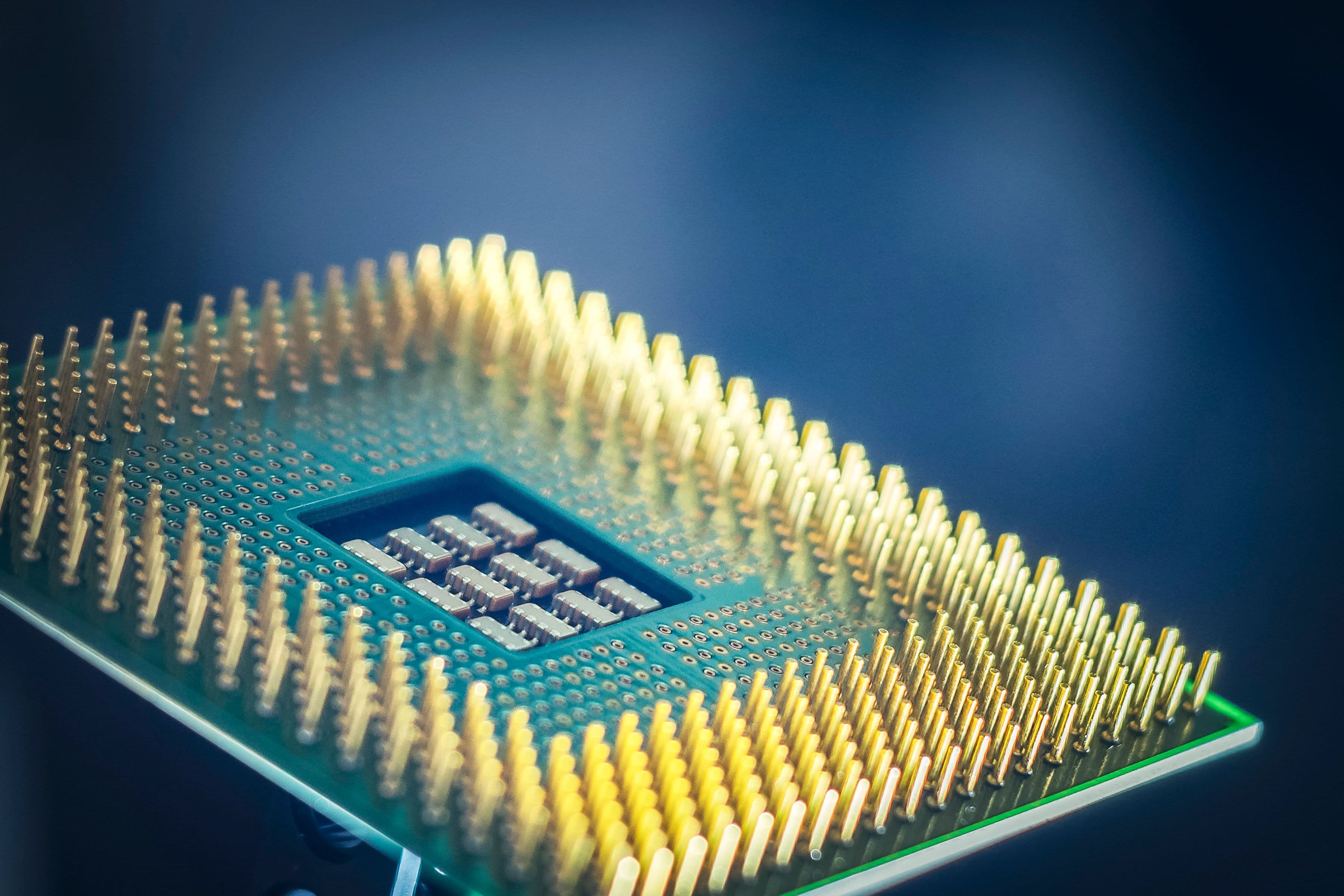
Arm has announced the Mali G2-Ultra NX, its first GPU designed from the ground up with AI workloads as a primary target rather than an add-on. The chip is positioned to handle on-device inference tasks—including image processing, multimodal features, and real-time AI effects—directly within the GPU pipeline without offloading to a dedicated NPU. For developers targeting Android and embedded platforms, this signals that AI acceleration is moving deeper into the base GPU architecture, potentially simplifying deployment by reducing dependency on NPU-specific code paths. The Mali G2-Ultra NX is expected to appear in next-generation mobile SoCs, meaning developers will need to revisit optimization strategies for GPU-native inference. This represents a meaningful shift in the mobile AI hardware stack that will affect framework-level tooling and kernel optimization work.
Unite.AI

Huawei Unveils Trifold Smartphone Powered by Tau Scaling Law-Based Kirin Chip
Huawei has launched a new trifold smartphone featuring a next-generation Kirin chip built around what the company calls the Tau Scaling Law, a proprietary architectural approach to improving AI compute efficiency. The Kirin chip's LogicFolding technique is described as allowing denser logic integration to support larger on-device AI model capacity. For the broader AI chip landscape, Huawei's continued investment in bespoke silicon scaling laws signals that Chinese semiconductor firms are developing independent theoretical frameworks rather than following established scaling paradigms from Western labs. Developers targeting Chinese device markets or studying on-device AI efficiency will want to track how Tau Scaling Law-based designs perform against established architectures in practice. This also underscores ongoing momentum in vertically integrated AI hardware outside the NVIDIA/Arm-dominated ecosystem.
Tech - South China Morning Post

Axis Robotics Releases Browser-Based Data Engine with 207 Robot Manipulation Tasks and 50,129 Trajectories
Axis Robotics has released AXIS, a browser-accessible data engine containing 207 distinct robot manipulation tasks and over 50,000 annotated trajectories for training robot learning models. The platform is designed to lower the barrier for researchers and developers who need large-scale demonstration data for imitation learning and reinforcement learning from human feedback in robotics. Having a browser-based interface means teams can label, browse, and export trajectory data without specialized local infrastructure, which could accelerate iteration cycles for robot manipulation research. For developers working on embodied AI, manipulation policies, or physical AI applications, AXIS provides a structured dataset resource that has previously been a significant bottleneck. The scale of 50,129 trajectories across 207 tasks represents a meaningful contribution to the open robotics data ecosystem.
MarkTechPost

Alibaba Cloud and Cambricon Join PyTorch Foundation; Ant Group Takes Gold Seat
Alibaba Cloud and chip designer Cambricon have joined the PyTorch Foundation, while Ant Group has taken a Gold membership seat, marking a notable expansion of Chinese AI infrastructure firms into the PyTorch governance structure. This signals growing institutional commitment from Chinese cloud and semiconductor players to the dominant open-source deep learning framework used globally by researchers and developers. For the PyTorch ecosystem, broader membership from hardware vendors like Cambricon could accelerate native support for non-NVIDIA AI accelerators within the framework. Developers working on cross-platform model deployment or exploring alternative AI hardware should watch whether this membership translates into upstream kernel contributions and hardware backend support. The move also reflects a strategic interest by Chinese firms in shaping the standards and direction of foundational ML tooling.
Unite.AI

OpenAI Signs as Anchor Customer for Firmus Malaysian AI Factories
Firmus, a Malaysian data center and AI infrastructure operator, has signed OpenAI as its anchor customer for a new network of AI factories being built in Malaysia. This deal positions Malaysia as a growing node in OpenAI's global compute infrastructure strategy, diversifying its data center footprint beyond the United States and Europe. For developers and enterprises in Southeast Asia, this could eventually translate into lower-latency API access and regional data residency options for OpenAI services. The deal also reflects broader geopolitical and economic incentives driving AI infrastructure investment into Asia-Pacific markets. Developers building production applications on OpenAI APIs should track regional infrastructure expansions as they can affect performance, compliance, and pricing over time.
Unite.AI

XPENG Commissions Humanoid Robot Production Lines as IRON Robot Enters Manufacturing
XPENG has commissioned dedicated humanoid robot production lines, with its IRON robot now walking off the production floor as a manufactured product rather than a prototype. The move marks one of the first instances of a major automotive-adjacent company standing up volume manufacturing infrastructure specifically for humanoid robots. For developers in the physical AI and embodied intelligence space, XPENG's production commissioning signals that the transition from lab demos to manufactured units is accelerating across multiple players simultaneously. The IRON robot is designed for real-world task execution, and its production status raises questions about the software stack, deployment APIs, and developer ecosystem XPENG intends to build around it. This development is relevant to teams exploring robot-as-a-platform opportunities and the tooling needed to deploy AI policies on physical humanoid hardware.
Unite.AI

China's Moonshot and Z.ai Bring AI Model Subscriptions to Tmall Retail Shelves
Chinese AI startups Moonshot and Z.ai have launched consumer-facing AI model subscription products directly on Tmall, Alibaba's e-commerce platform, bringing the AI model subscription race into mainstream retail distribution channels. This is a notable commercialization move that mirrors how consumer software has historically expanded reach through app stores and retail bundles, but applied to large language model access. For developers and product teams building AI-powered applications in the Chinese market, this distribution shift suggests consumer expectations around AI access pricing and bundling may evolve rapidly. The move also reflects intensifying competition among Chinese AI model providers to lock in consumer mindshare through platform distribution rather than direct developer channels alone. Developers targeting Chinese end-users should monitor how Tmall-distributed AI subscriptions affect user acquisition dynamics and competitive positioning.
Tech - South China Morning Post