
Today's briefs

Anthropic Reports Claude Agents Mitigated Ten Alignment Failures in Real Deployments
Anthropic has published findings showing that Claude agents autonomously identified and mitigated ten distinct alignment failures during real-world deployments. This is notable because it represents empirical, in-production evidence of agentic safety mechanisms functioning as intended rather than just benchmark results. The report signals that Anthropic is moving toward more transparent, case-study-driven safety reporting for its agent systems. For developers building autonomous pipelines on Claude, this data provides concrete grounding for evaluating the model's reliability in high-stakes agentic workflows. It also raises the bar for what safety transparency looks like in the agentic era, likely pressuring other labs to publish similar operational safety data.
Anthropic
Vercel Open-Sources vgpu: A TypeScript WebGPU Library for AI Agent Shaders
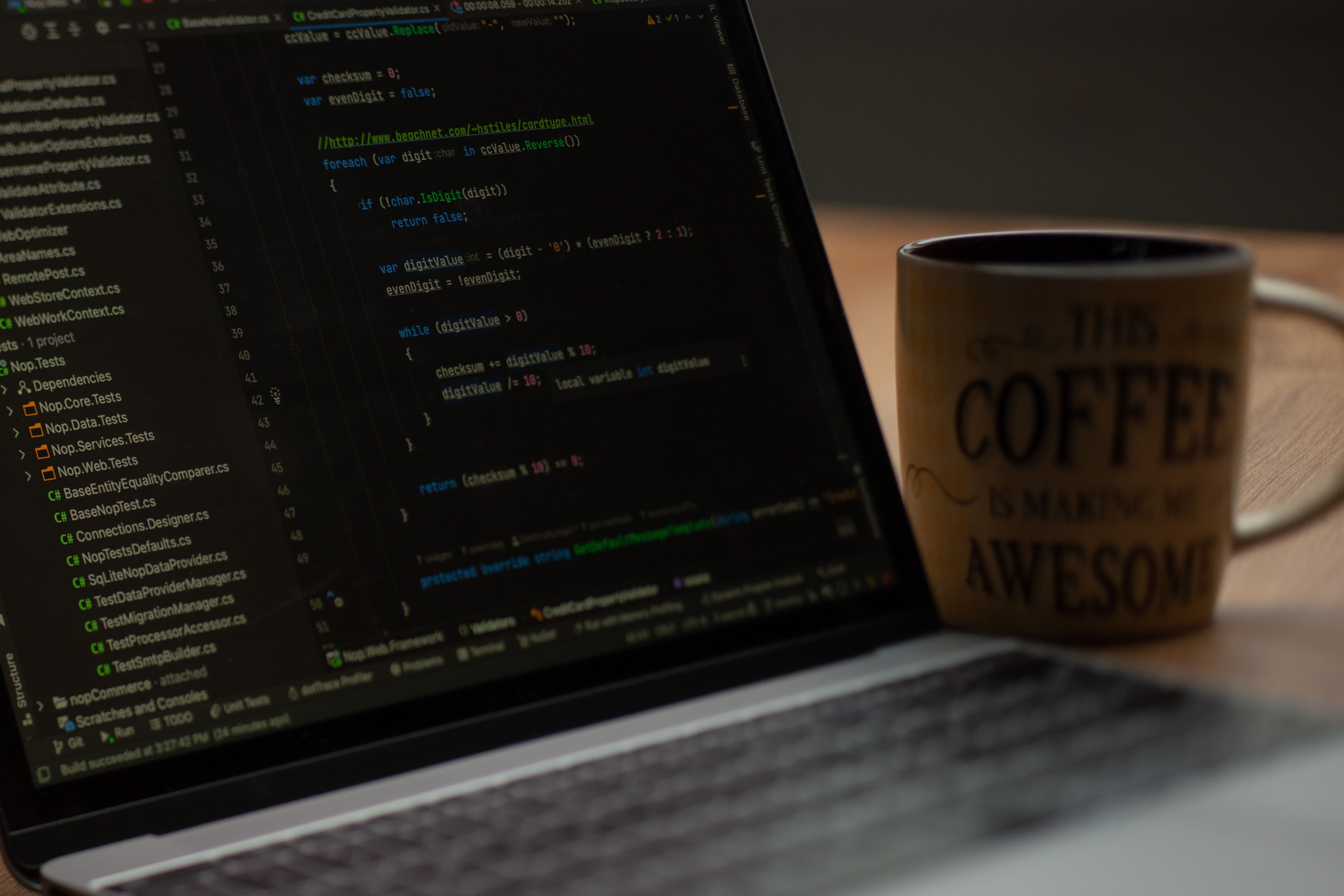
Vercel has released vgpu, an open-source TypeScript library that exposes WebGPU primitives specifically designed for running AI agent shaders in the browser and edge environments. This gives front-end and full-stack developers a native TypeScript path to GPU-accelerated AI inference without dropping into low-level WGSL or C++ bindings. The library is framed around agentic use cases, enabling on-device computation for AI workloads that previously required server-side inference. For developers building client-side AI features or latency-sensitive agent interactions, vgpu could significantly reduce round-trip costs and infrastructure dependency. Its open-source release means the community can extend shader support and benchmark it against existing WebAssembly-based inference approaches.
Vercel

Hugging Face Launches Microduck: A $399 Open-Source RL-Trained Biped Robot
Hugging Face and Pollen Robotics have unveiled Microduck, a 25 cm bipedal robot priced at $399 that users train using reinforcement learning. The robot is fully open-source, covering both hardware designs and training code, making it accessible for researchers and hobbyists who want to experiment with physical AI without enterprise-level budgets. Microduck is positioned as an educational and research platform for RL-based locomotion, with Hugging Face's model hub infrastructure presumably backing model sharing and iteration. For developers interested in embodied AI, this dramatically lowers the entry point for hands-on RL experimentation with a physical agent. It also extends Hugging Face's open-source ecosystem into robotics, signaling the platform's ambitions beyond language and vision models.
Hugging Face

GLM-5.3-Flash and Qwen3.8-Flash-Next Independently Converge on the Same Model Architecture
Researchers at Zhipu AI (GLM-5.3-Flash) and Alibaba (Qwen3.8-Flash-Next) have independently arrived at nearly identical model architectures for their latest flash-class models, despite working in separate labs. This architectural convergence suggests the design space for efficient small models may be narrowing toward specific structural optima, a finding with broad implications for model design research. For developers choosing between Chinese open-source models for latency-critical applications, the overlap in architecture means the differentiation will increasingly come from training data, fine-tuning, and ecosystem rather than core design. The story also highlights how competitive pressure among Chinese AI labs is accelerating parallel discovery, mirroring historical patterns seen in Western labs. Engineers evaluating flash-tier models for production use should track both lineages closely, as they may offer interchangeable deployment characteristics.
MarkTechPost

Andreessen Horowitz Raises $1.1B Machine Age Fund Targeting AI Infrastructure
Andreessen Horowitz has closed a $1.1 billion fund specifically dedicated to AI infrastructure investments, branded the Machine Age Fund. The fund signals sustained conviction from one of the most influential VC firms that infrastructure — compute, networking, storage, and the platforms connecting them — remains the critical bottleneck and investment opportunity in the AI stack. For startups building in the infrastructure layer, this represents a well-resourced backer actively seeking deployment targets in that space. Developers and engineering teams should expect continued rapid expansion of AI-native infrastructure tooling and services as this capital flows into the ecosystem. It also reinforces the multi-year capital cycle underpinning the current AI build-out, suggesting infrastructure constraints won't ease through organic market correction alone.
Unite.AI

Anthropic Opens 10,000 Free and Discounted Claude Seats for Scientists
Anthropic is providing 10,000 free and discounted Claude API seats to scientists and researchers as part of a new access program. The initiative is designed to accelerate scientific discovery by making frontier AI capabilities available to researchers who lack the budget for commercial-scale API access. For the scientific computing community, this creates a practical on-ramp to integrating Claude into literature review, hypothesis generation, data analysis, and experimental design workflows. Developers building tools for research institutions should note the potential growth in Claude adoption within academic and government science settings this program could catalyze. It also positions Anthropic favorably in the research community alongside its separate Claude for Teachers education push.
Anthropic

Blue Owl Funds Lead $2.4B AI Factory Equipment Financing for IREN
Blue Owl Capital has led a $2.4 billion equipment financing facility for IREN, a company building AI factory infrastructure including GPU clusters and associated data center hardware. This is one of the larger single infrastructure financing rounds specifically earmarked for AI compute buildout outside of the hyperscalers. The deal reflects a maturing market where alternative asset managers, not just traditional tech investors, are financing the physical layer of AI infrastructure. For developers and engineers, this signals continued expansion of third-party GPU cloud capacity, which could provide additional supply-side relief in the competitive market for inference and training compute. It also illustrates the scale of capital now flowing into purpose-built AI infrastructure separate from general data center investment.
Unite.AI
China's CXMT Posts 870% Revenue Surge as Domestic Memory Chip Expansion Pays Off
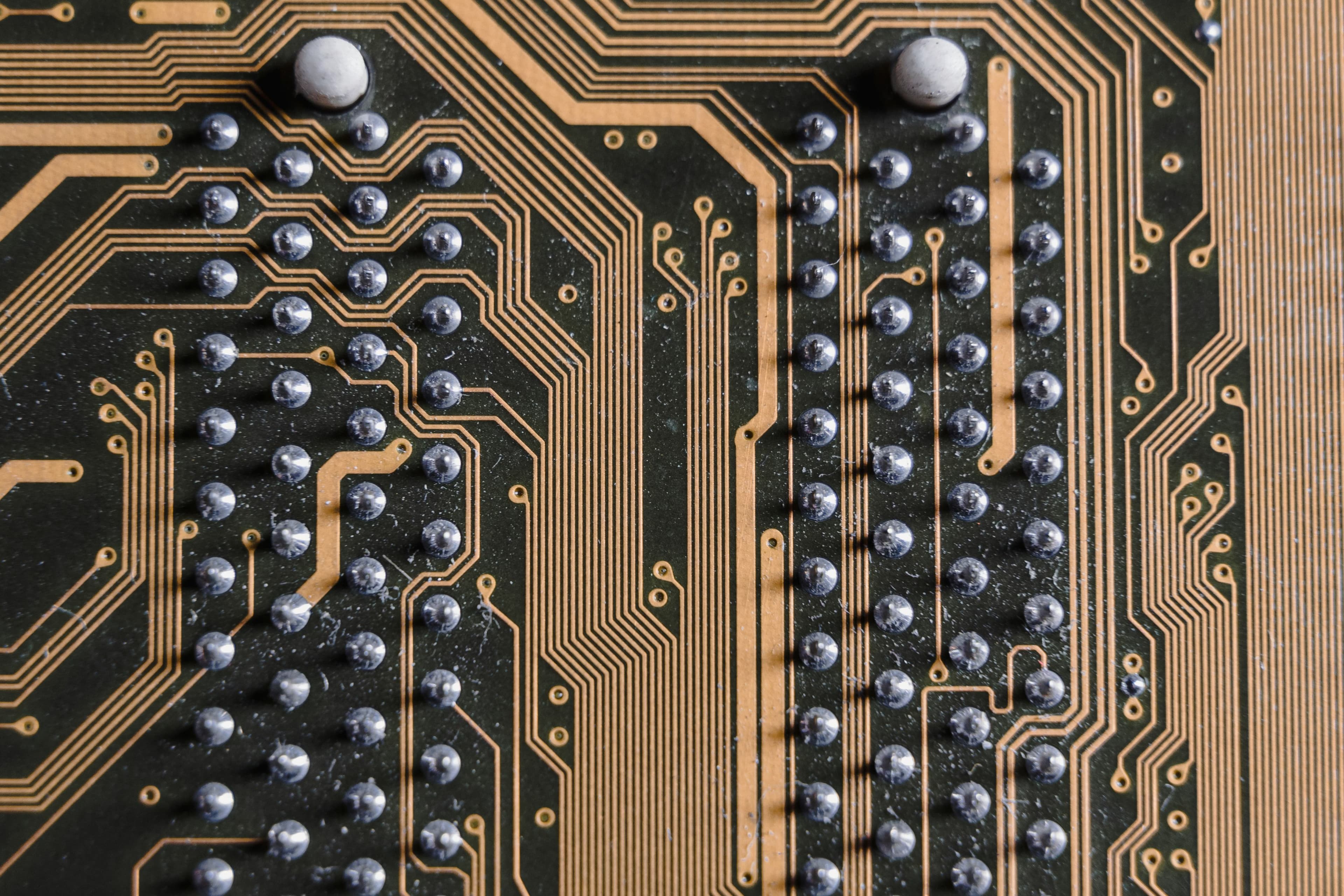
ChangXin Memory Technologies (CXMT), China's leading domestic DRAM manufacturer, has reported an 870% year-over-year revenue surge as its aggressive capacity expansion strategy begins to deliver results. The growth reflects strong domestic demand for memory chips driven by AI training and inference workloads, as well as deliberate efforts to reduce reliance on foreign suppliers like Samsung, SK Hynix, and Micron. For AI infrastructure planners, CXMT's rapid scaling introduces a meaningful new variable in global memory supply and pricing dynamics, particularly if Chinese AI labs increasingly source domestically. Developers working on hardware procurement strategies for large-scale training should monitor how CXMT's cost structure compares to incumbents as its volumes grow. This also reinforces the broader trend of China advancing self-sufficiency across the AI hardware supply chain.
South China Morning Post

Anthropic Launches Claude for Teachers Program Across Schools and Districts
Anthropic has rolled out Claude for Teachers, a program bringing Claude access to K-12 educators through school and district-level agreements. The offering is designed to help teachers with lesson planning, differentiated instruction, student feedback, and administrative tasks. For developers building EdTech products, this signals Anthropic's intent to establish Claude as the default AI layer in educational institutions, potentially creating integration opportunities at the district scale. The move mirrors broader trends of foundation model providers pursuing vertical market programs to deepen adoption outside of developer and enterprise segments. It also pairs with the concurrent 10,000 free seats for scientists initiative, suggesting Anthropic is executing a coordinated push into institutional and educational markets.
Anthropic