
Also today

Sakana AI Releases Fugu-Cyber: Orchestration Model Scores 86.9% on CyberGym and 72.1% on CTI-REALM
Sakana AI has released Fugu-Cyber, an orchestration model purpose-built for cybersecurity tasks, reporting 86.9% on the CyberGym benchmark and 72.1% on CTI-REALM — two specialized evaluations for cyber threat intelligence and response. The model is designed to coordinate lower-level security tools and agents rather than act as a monolithic reasoner, positioning it in the emerging category of orchestration-layer AI. For security engineers and AI developers building threat intelligence pipelines, Fugu-Cyber represents a concrete step toward specialized agentic systems that can manage complex, multi-step security workflows. Sakana AI has been notable for evolutionary and compositional approaches to model development, and this release extends that philosophy into a high-stakes applied domain. Developers working on CTI pipelines, SOC automation, or red-team tooling should evaluate the published benchmarks against their specific threat models.
MarkTechPost

Open Dreamer Releases Full JAX/Flax Reproduction of Dreamer 4 World Model Pipeline
Open Dreamer is a fully open JAX/Flax reproduction of the Dreamer 4 world model pipeline, with the complete training recipe published for the community to inspect, reproduce, and extend. World models like Dreamer 4 enable agents to learn environment dynamics internally and plan within a learned latent space, which is foundational for sample-efficient reinforcement learning. By publishing the full training recipe alongside the implementation, the project lowers the barrier for researchers and engineers who want to experiment with model-based RL without proprietary dependencies. The JAX/Flax stack makes it well-suited for TPU training and modern accelerator workflows, and the open recipe means practitioners can audit every training decision. This is directly useful for developers working on simulation-based training, robotics, or any domain where real-world interaction is expensive.
MarkTechPost
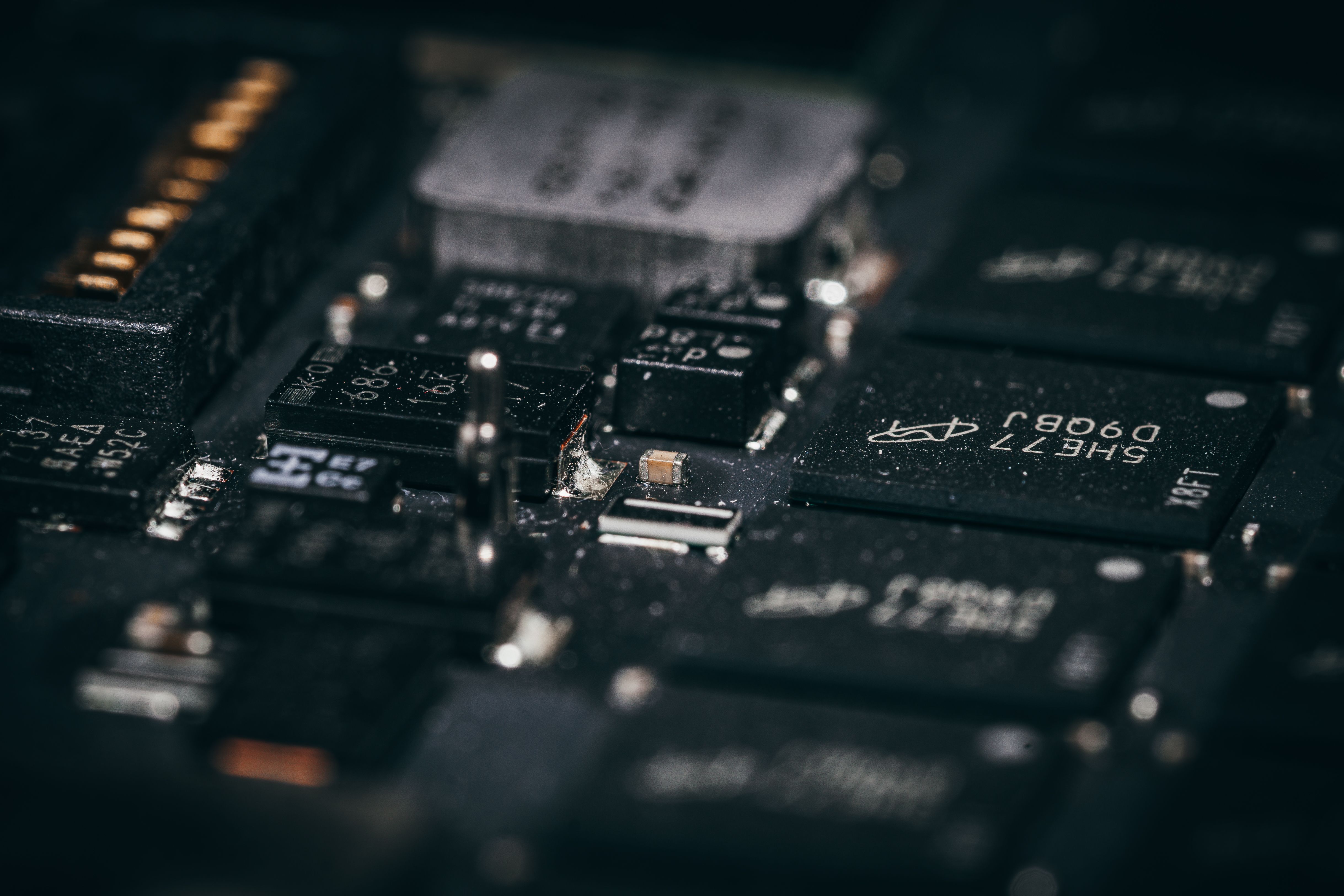
TileLang Enables High-Performance GPU Kernel Design for Tensor-Core GEMM, FlashAttention, and Fused Softmax
TileLang is a new GPU kernel design framework that exposes Tensor Core-level primitives and supports autotuning, enabling engineers to write high-performance kernels for GEMM, fused softmax, and FlashAttention without dropping all the way into raw CUDA. The framework abstracts tile-level operations while preserving the performance characteristics that matter for LLM inference and training workloads. For ML infrastructure engineers, this addresses a real pain point: getting close-to-optimal GPU utilization for attention and linear algebra operations has historically required deep CUDA expertise or reliance on vendor libraries. TileLang's autotuning capability means developers can iterate on kernel designs and let the framework find efficient configurations, reducing the expert knowledge barrier. Teams building custom inference engines, fine-tuning stacks, or operator libraries should evaluate TileLang as an alternative or complement to Triton and cuDNN.
MarkTechPost

OpenSpace Framework Enables Self-Evolving AI Agents with Skill Reuse, MCP, and Lineage Tracking
OpenSpace is a new agent framework designed for self-evolving AI systems, allowing agents to accumulate reusable skills, track lineage of past actions, and leverage the Model Context Protocol (MCP) to reduce the cost of repeated task execution. Unlike static agent pipelines, OpenSpace is built around the idea that agents should improve their own capability inventory over time by storing and indexing skills acquired during prior runs. Lineage tracking gives developers auditability — a key requirement for production agentic systems where understanding why an agent took a specific action matters for debugging and compliance. The low-cost reuse mechanism is particularly significant for developers building agents that handle repetitive enterprise workflows, where redundant LLM calls are a major cost driver. Engineers evaluating long-running or multi-session agent architectures should examine OpenSpace's skill-graph approach as an alternative to pure in-context or RAG-based memory.
MarkTechPost

Datalab Marker v2 Benchmarked Against MinerU, Docling, and Liteparse for Document Parsing
Datalab has published a benchmark comparison of Marker v2 against three competing document parsing tools — MinerU, Docling, and Liteparse — across a range of document types and complexity levels. Document parsing quality is a critical upstream dependency for RAG pipelines, knowledge extraction systems, and any LLM application that ingests PDFs or structured documents, making this comparison directly actionable for developers. The benchmark breakdown covers accuracy, layout preservation, and handling of complex elements like tables and figures, which are common failure modes for parser pipelines. Marker v2's results position it within the competitive landscape of open and commercial parsing tools, giving teams concrete data to guide toolchain selection. Developers building document-heavy AI applications should use this benchmark to pressure-test their current parser choice against realistic workloads.
MarkTechPost